
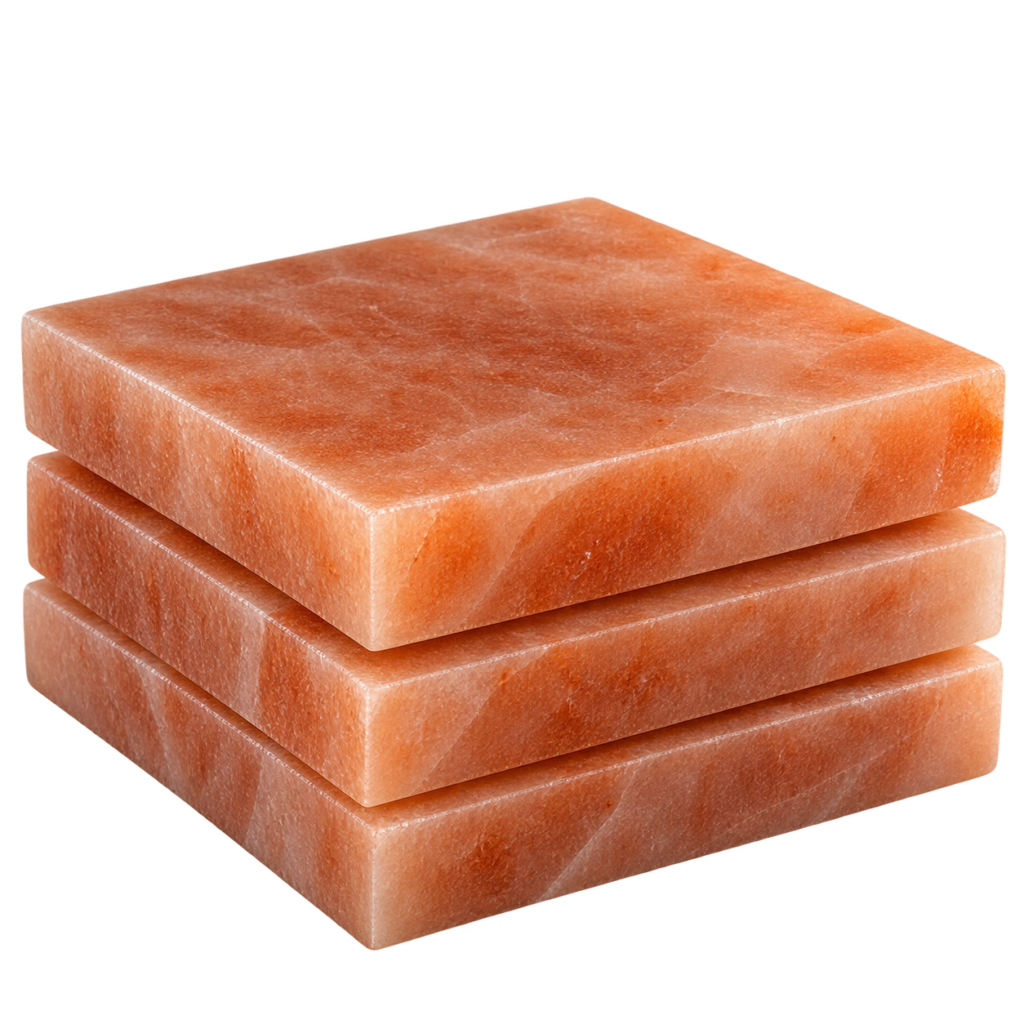
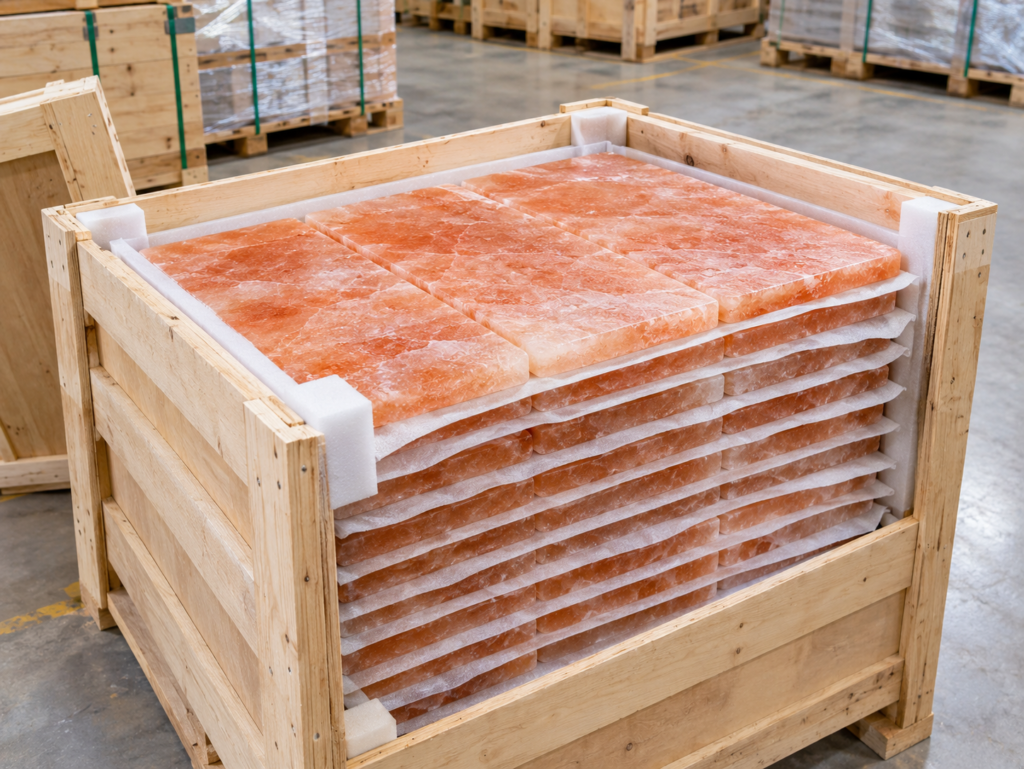
Himalayan salt wall and floor tiles supplied in bulk to spa contractors, sauna builders, and salt therapy installers. Cut in multiple thicknesses and thickness-matched within each order, so a backlit wall reads as one continuous glowing surface rather than a patchwork of bright and dark panels. Available with natural or polished faces, in standard and custom formats, crated for site delivery with coverage calculated per square metre.
Five formats across wall, floor, and sauna installation. Standard wall tiles at 20 × 10cm are the volume line for feature walls and salt room surfaces. Thin backlit panels are cut down to transmit light evenly and are specified wherever the wall is illuminated. Large-format tiles reduce joint count on wide surfaces and speed installation. Floor tiles are cut thicker and left with a natural face for grip underfoot. Sauna grade is selected for density, since tiles in a heated cabin face thermal cycling that a wall tile never does.
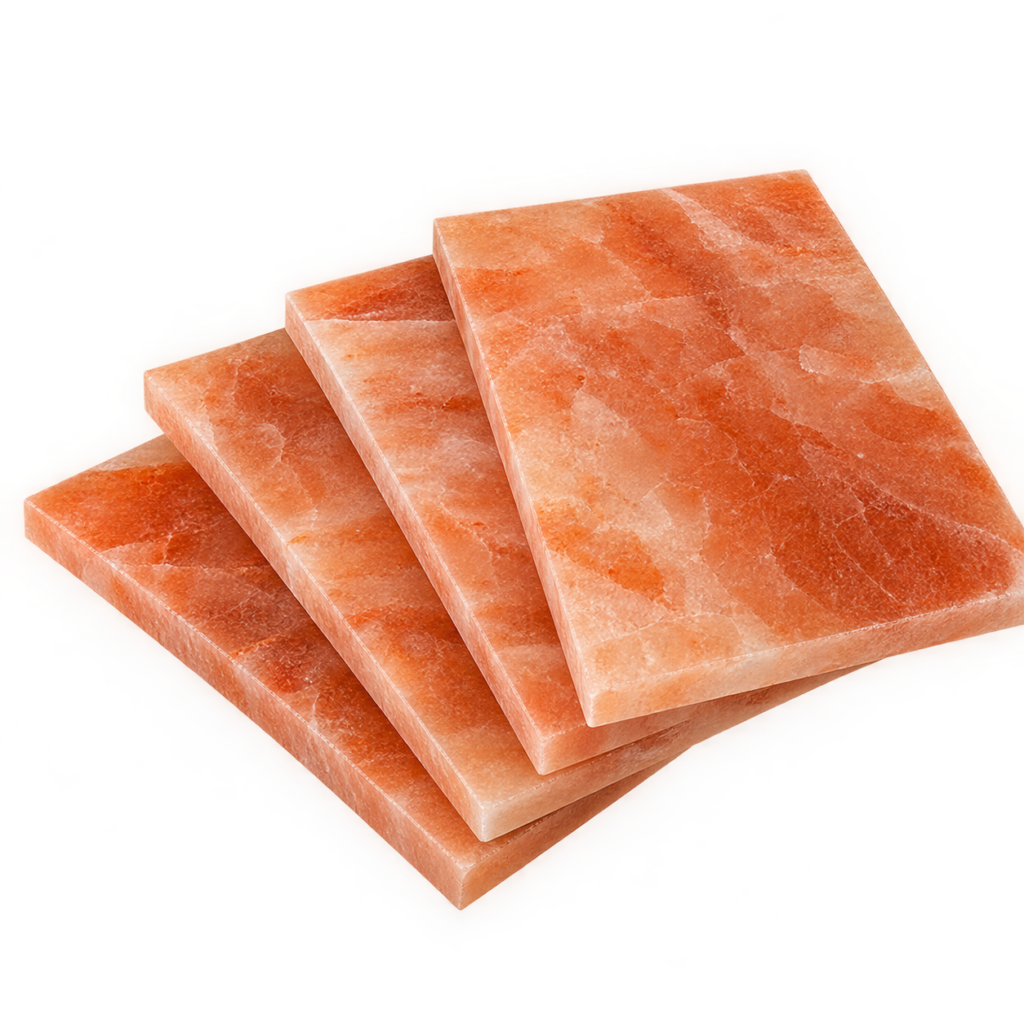
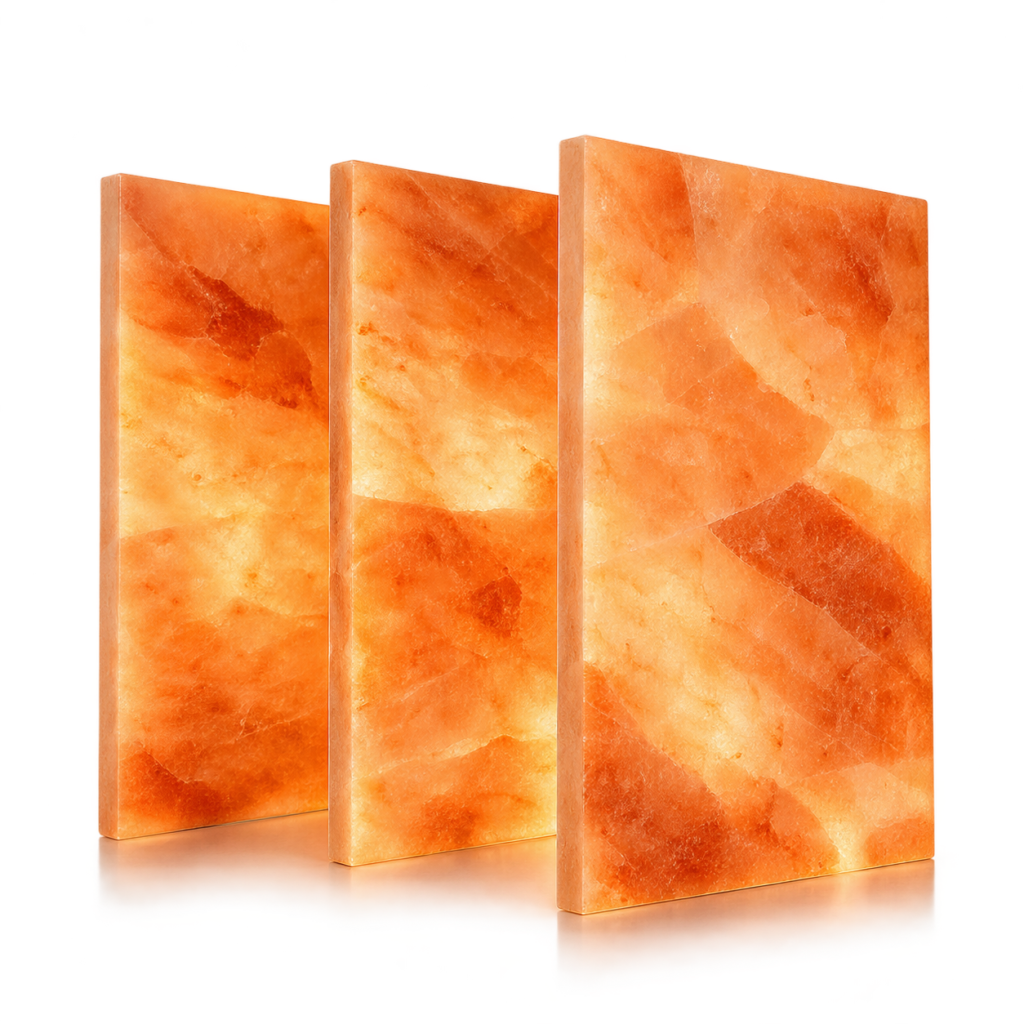
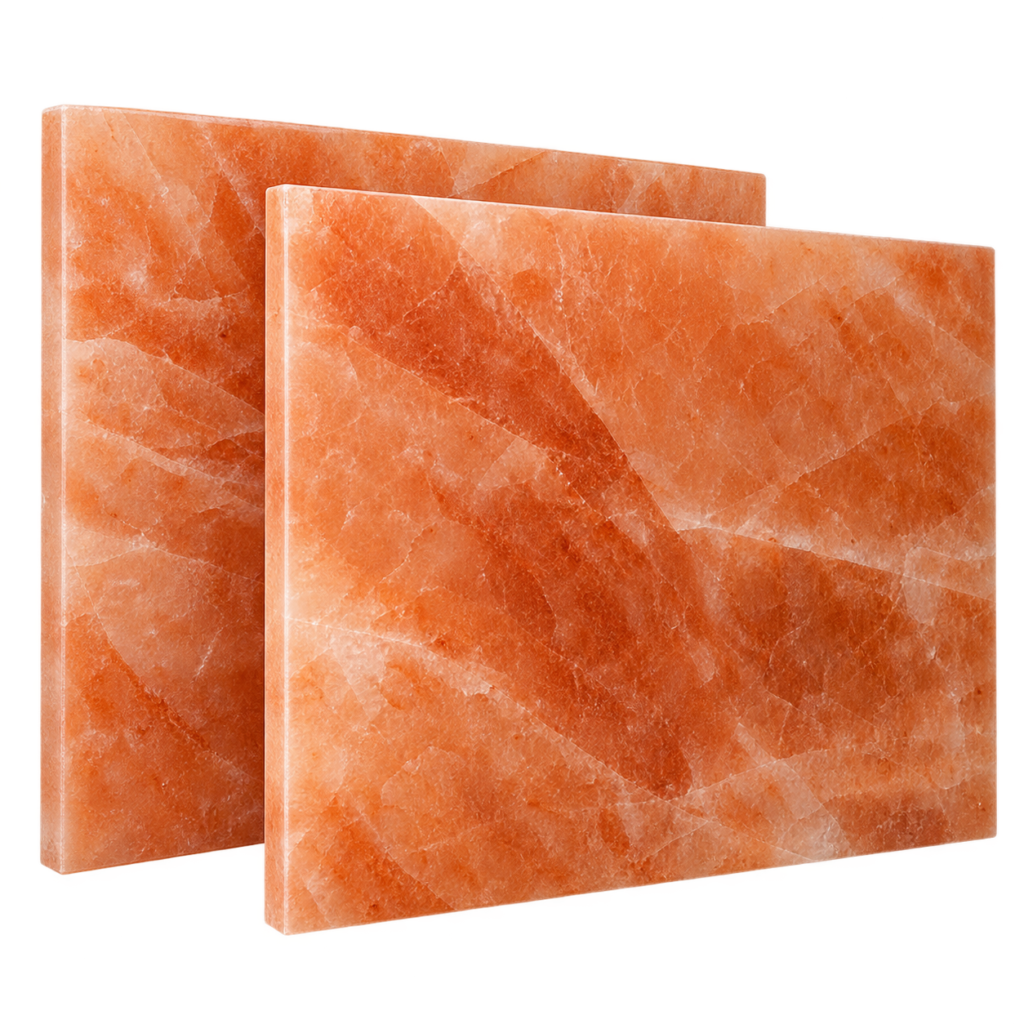
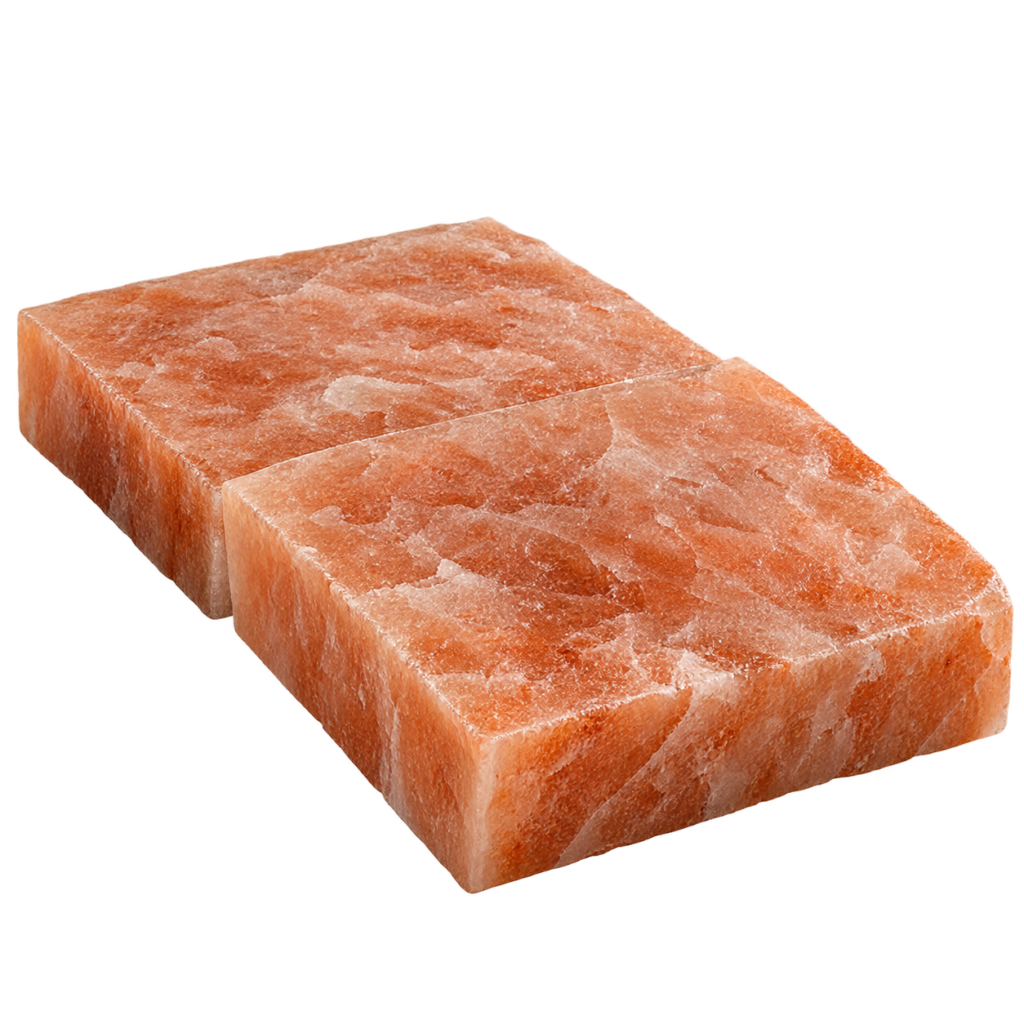
Salt tiles are almost always lit from behind, and light is unforgiving of variation that the eye would never notice in daylight.
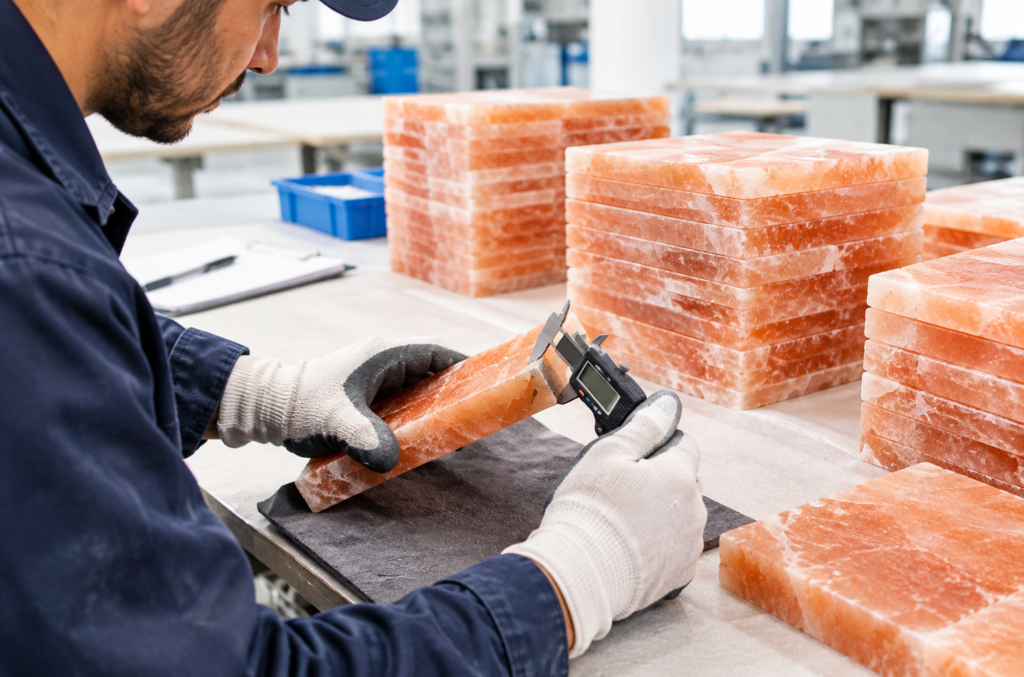
The difference between a salt wall that looks expensive and one that looks amateur is almost entirely about consistency, and consistency is decided by the supplier rather than by the installer. A contractor can lay tiles perfectly and still hand over a wall that reads as blotchy, because the material arrived with variation the eye only picks up once the lighting goes in.
Thickness is the usual culprit. Salt transmits light in proportion to how much of it the light has to pass through, so a panel two millimetres thinner than its neighbour glows noticeably brighter. In daylight, during installation, this is invisible. Switch the backlighting on at handover and it is the first thing anyone sees. Matching thickness across an order costs cutting time and yield, which is why most suppliers do not do it and most salt walls look uneven.
Seam variation compounds it. Two tiles cut to identical thickness from different parts of the range will still transmit light differently, because mineral density is not uniform through the deposit. Selecting from consistent seams for a single order is the only reliable fix, and it means treating each project as a batch rather than picking tiles off general stock.
Floor and sauna applications bring their own constraints. Floor tiles carry foot traffic and need thickness and a natural face for grip. Sauna tiles face repeated heating and cooling, and a tile with internal fissures will fail under that cycling regardless of how good it looks on delivery.
Substrate and fixing deserve attention at specification stage rather than on site. Salt tiles are heavier than ceramic of equivalent size, and a standard tile wall adds meaningful load per square metre to whatever is behind it. Plasterboard without additional support will not carry it over time. Adhesive choice matters too, since salt reacts badly to water-based products that keep it damp against the substrate. Contractors who treat salt as a ceramic tile and fix it the same way tend to get a wall that looks perfect for a season and then starts moving.
We supply salt therapy room builders, spa and sauna contractors, architects and interior designers, hotel developers, and construction distributors across 45 countries. Our export team can calculate coverage per square metre, advise on thickness against your lighting design, and specify the right grade for wall, floor, or sauna use.
WhatsApp us