
Five product categories and sixteen production lines, all cut from the same certified seams at our own facility at the foothills of the Salt Range in Pakistan. Edible salt for food manufacturing and retail, lamps for homeware and gift, bath and wellness products under cosmetic grade, mineral licks for livestock, and construction-grade bricks and tiles for salt therapy rooms. Bulk quantities, private label, and export documentation to 45 countries.
Each category serves a different buyer under a different set of rules. Edible salt is food-grade and BRCGS certified. Bath and wellness sits under cosmetic regulation with its own INCI documentation. Animal licks clear customs under a veterinary and feed-import regime. Construction salt is cut to building tolerance rather than sold by weight. Lamps are manufactured electrical products requiring market-specific cord approval. Choosing the right category is usually the first thing to get right.
Rope-hung, free-standing, drilled, and equine formats available across the range.
View full licks rangeMost Himalayan salt reaching international markets passes through at least one trading house between the mine and the buyer. That layer adds cost and removes information.
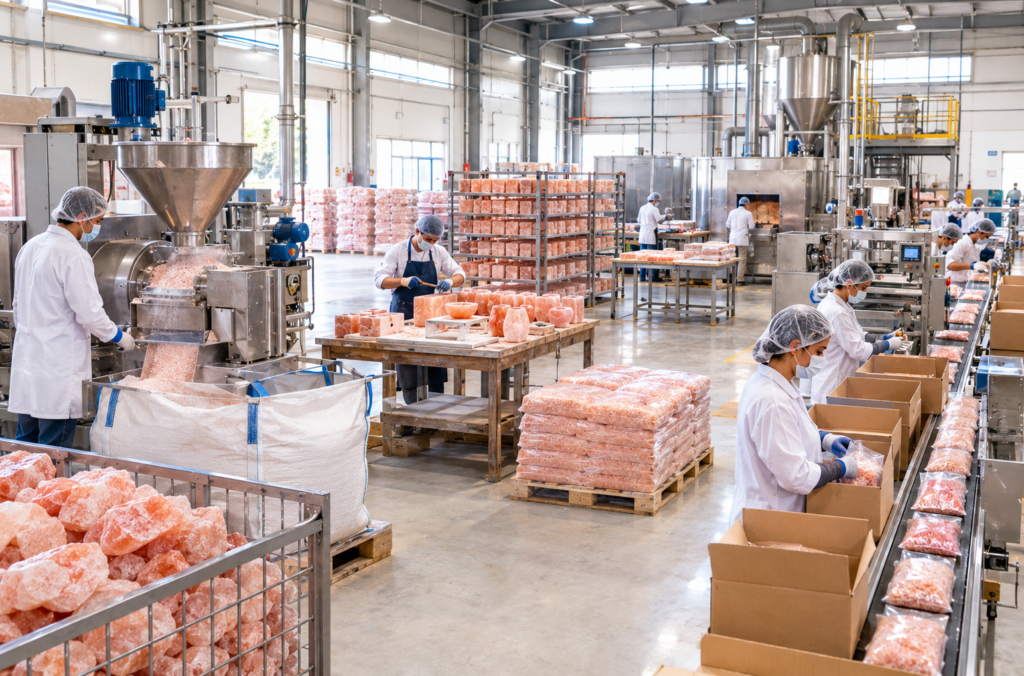
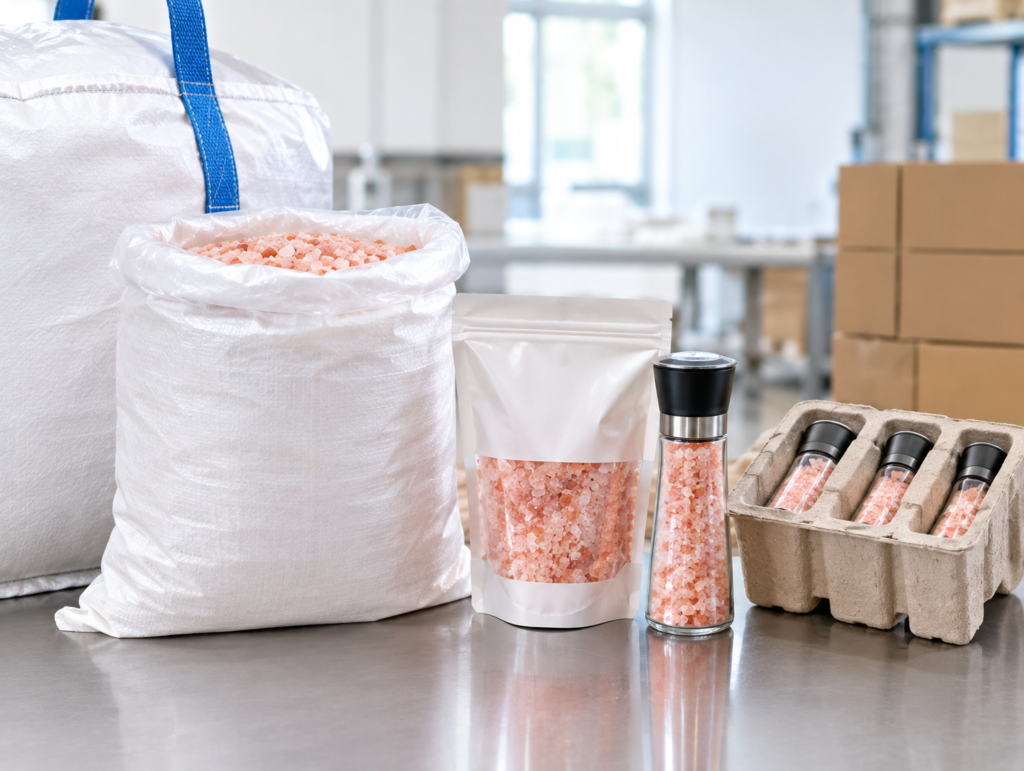
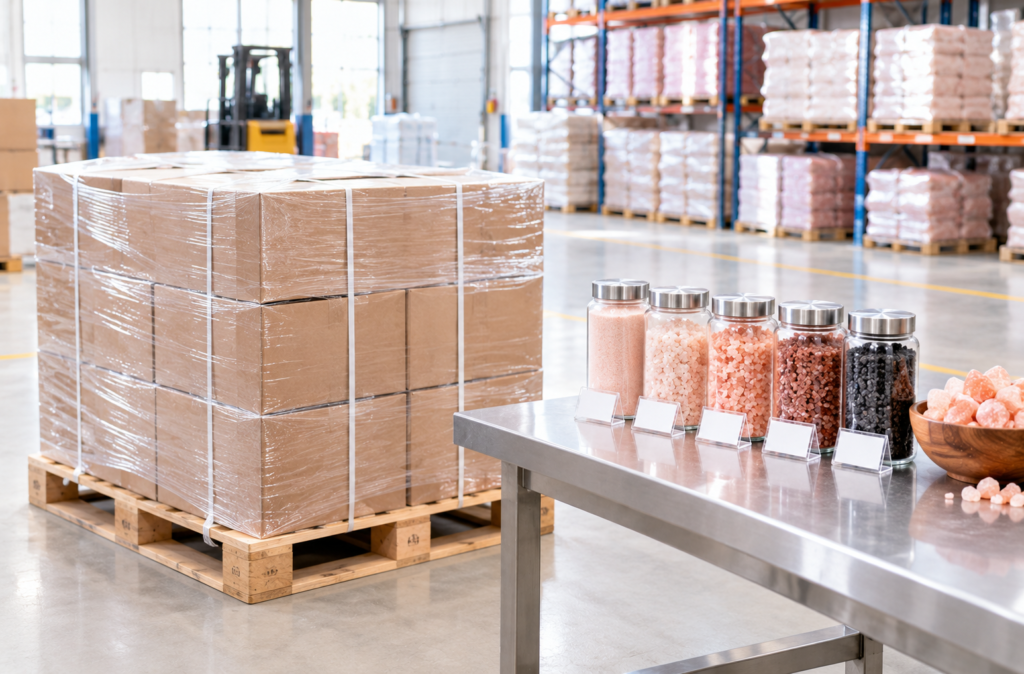
Packaging is specified by application rather than offered from a fixed list, because the same salt shipped for three different uses needs three different approaches. Bulk food ingredient moves in 25kg and 50kg poly-lined bags, one-tonne jumbo bags, or bulk container liner. Retail product is filled into grinders, pouches, jars, and canisters under your own artwork. Lamps and carved goods ship in double-wall cartons with moulded inserts built around drop testing. Construction material is crated with edge protection and an agreed breakage overage. Animal licks palletise to your handling equipment.
Two constraints run across everything we ship. Salt is hygroscopic, so anything crossing a humid route needs moisture-barrier packing rather than decorative wrap — the most common cause of a rejected shipment in this category. And salt is heavy relative to its value, which makes container loading efficiency a larger factor in landed cost than unit price for most buyers. We will model both against your route before you commit.
Packaging choice also carries a freight cost that is easy to overlook at the quoting stage. Glass presents beautifully on a shelf and adds substantial weight per unit. Pouches ship at a fraction of that and protect better against moisture, at the cost of presence. Neither is the right answer universally, and the difference between them across a container is large enough to change whether a price point works. We will price both rather than quoting whichever is simpler for us to fill.
WhatsApp us