We manufacture private label Himalayan salt across every product we make — edible salt, grinder packs, bath salts, salt soap, lamps, cooking blocks, and animal licks — in your packaging, under your brand, with your artwork. Supply can be entirely unbranded for brands that label in-market, or fully finished with your labels, cartons, hang tags, and barcodes applied here. Low first-run minimums while you test a range, and full container capacity when it works.
Private label is not a separate product line. Every product on this site can be produced under your brand, in your packaging, to your specification. Some formats suit own-brand better than others — grinder packs, bath salt jars, and gift sets carry the strongest retail margins — but nothing in the range is excluded, including construction material and livestock licks where distributor branding matters as much as it does in retail.
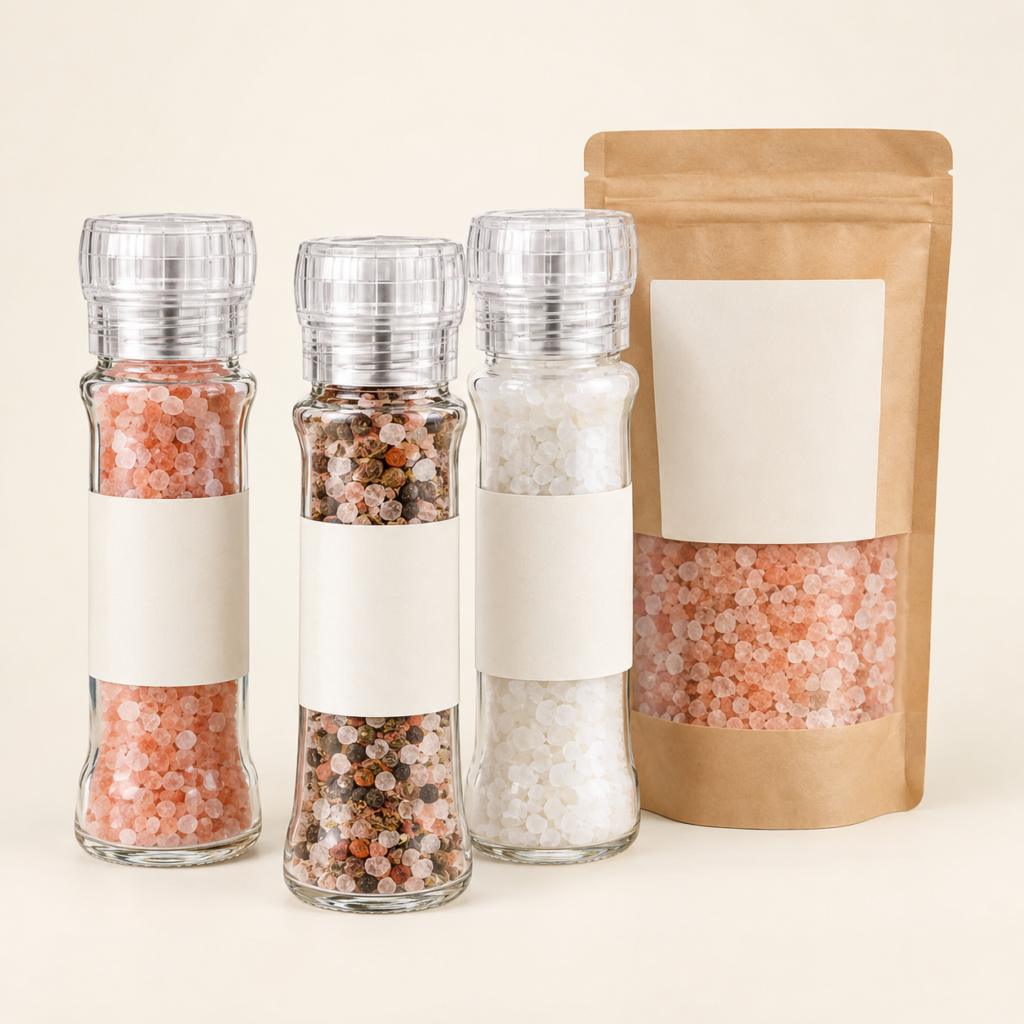




Entirely unbranded product in plain packaging, shipped for you to label in-market.
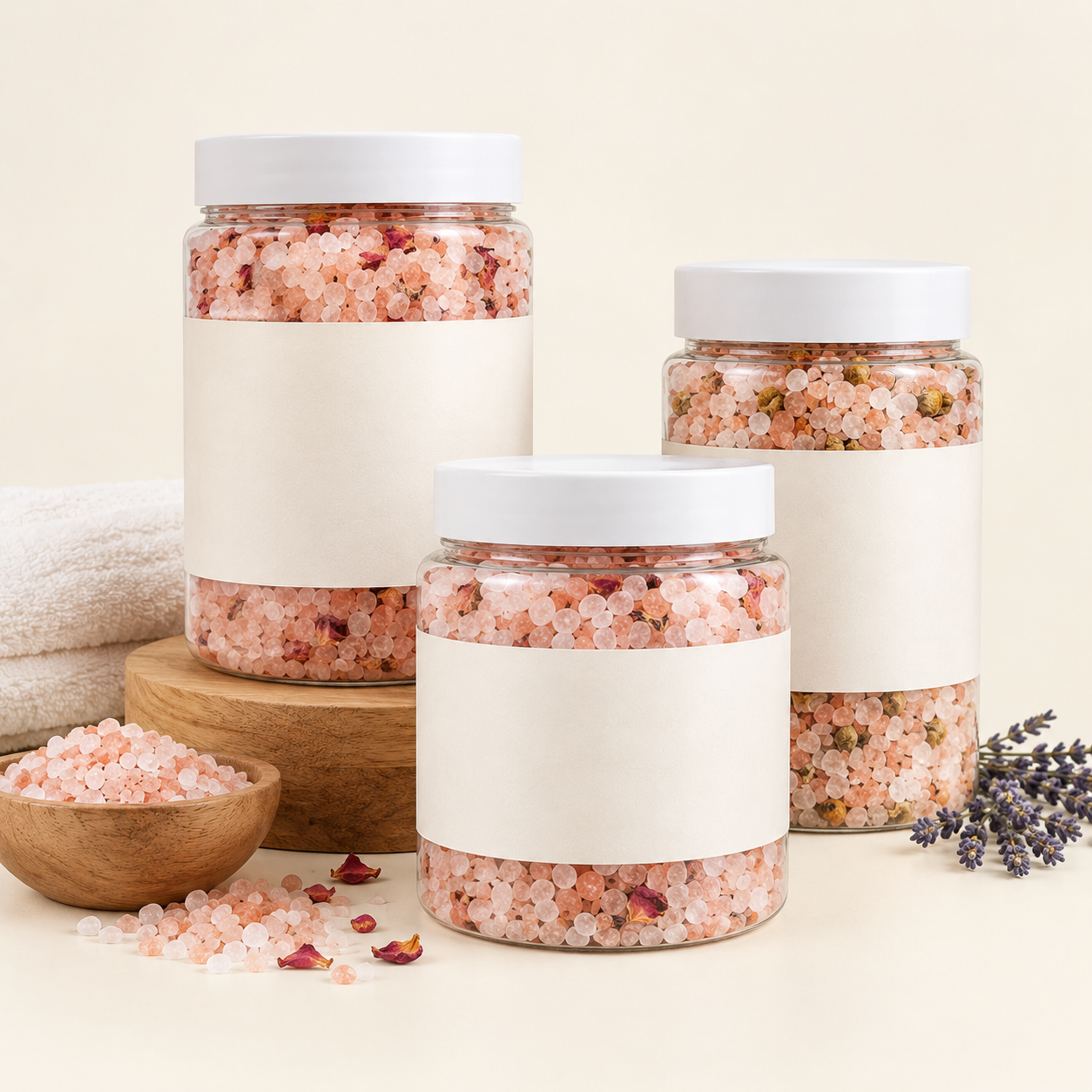
Your primary packaging applied here, market-specific labelling applied at destination.
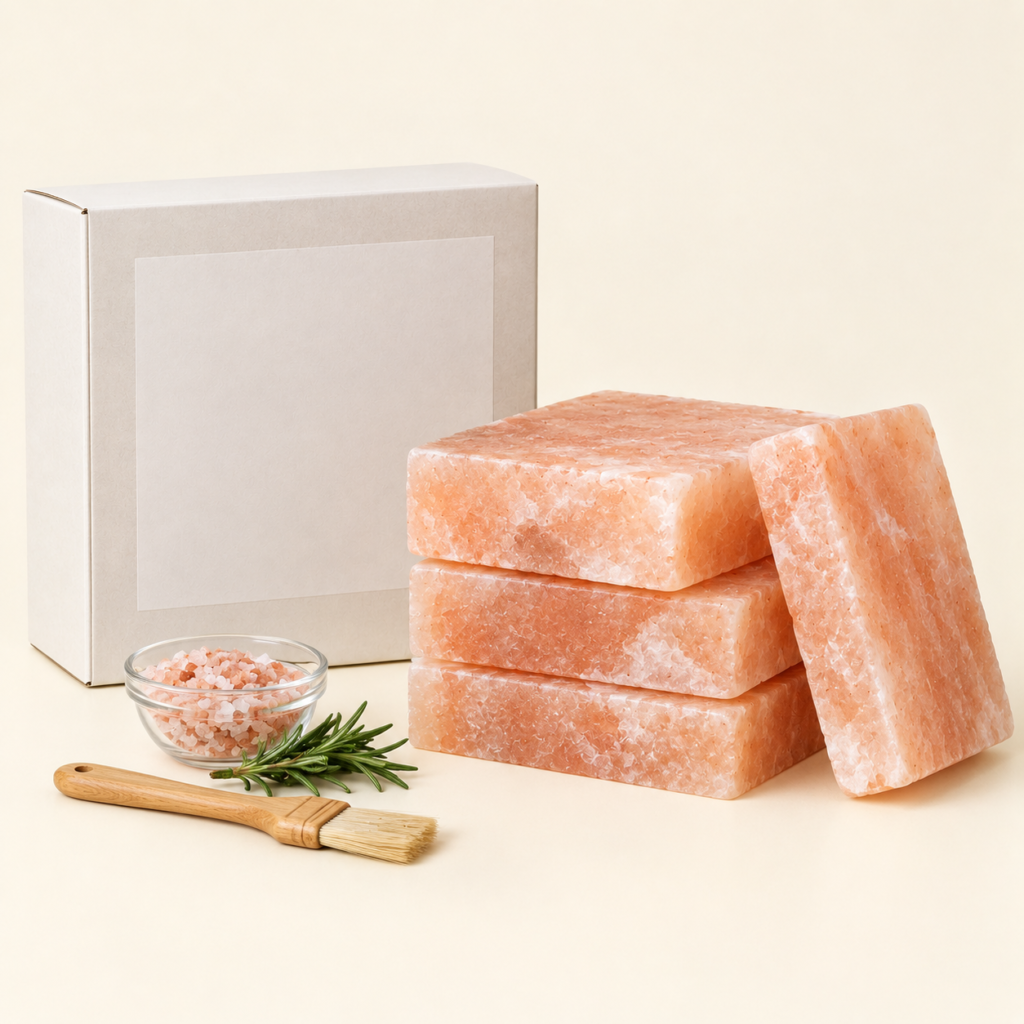
Everything applied here — arrives ready for the shelf with no handling between container and store.

We fill into your packaging or source it on your behalf, and either works. Brands with an established packaging supplier usually ship components to us. Brands starting out generally prefer us to source, because packaging minimums from a separate supplier are often higher than the product minimum and tie up cash before a line is proven.
Formats across the range include clear and frosted glass grinders with ceramic or stainless mechanisms, stand-up pouches in matte or gloss finish with or without windows, glass apothecary jars for bath salt, plastic and glass canisters for table salt, shrink-wrapped soap bars with belly bands or boxed presentation, moulded-insert cartons for lamps, individually wrapped and boxed cooking blocks, and multi-item gift sets combining products into a single SKU. Outer cartons, pallet configurations, and shipping marks are all produced to your specification.
Dielines are supplied for every format so your designer works to real dimensions rather than estimating, and we proof artwork before production rather than after.
Fill weight is worth settling early, because it drives both your shelf price and your freight cost and is harder to change later than the artwork is. A grinder filled to 100g and one filled to 170g look nearly identical on a shelf and land at meaningfully different costs per unit. Brands entering a category often copy a competitor’s fill weight without checking what it does to their own margin at their own volume. We will quote across two or three fill weights so the decision is made against real numbers rather than against what a competitor happens to do.

The awkward stage in any own-brand range is the gap between a validated test and a committed volume. A brand at that point needs enough stock to hold a listing without tying up cash in a container it may not sell through, and most suppliers are built for one end of that curve or the other. We are set up to move with it.
| Stage | Typical Quantity | Lead Time |
|---|---|---|
| Sample | Single units | 7–14 days |
| First run | Pallet quantity | 20–30 days |
| Growth | Multiple pallets / part container | 25–35 days |
| Established | Full container, scheduled programme | 25–35 days, scheduled |
Where brands most often get caught is between the first run and the second. A line that sells through faster than expected leaves a gap, because a reorder placed on the day stock runs out still takes the full lead time to arrive, plus transit. The fix is unglamorous and it works: place the second order before the first has sold through, using the first run's sell-through rate rather than its sell-out date. We will flag this at the first order rather than after a stockout.
Channel decides specification in ways that surprise first-time brand owners, and a supplier who only handles one regime leaves you to discover the other half late.
Cross-regime SKUs: A gift set combining a lamp and a bath salt jar crosses two regimes in a single SKU. We map that at the brief stage rather than at the border.
On claims: We will not put a claim on your packaging that we cannot evidence. We supply the analysis we actually hold and let you and your regulatory advisor decide what can be said on a label in your territory. A supplier who agrees to print anything you ask is not doing you a favour — they are transferring the risk to you.
WhatsApp us