
Food-grade Himalayan salt cooking blocks and serving slabs supplied wholesale to restaurant distributors, kitchenware retailers, and private label brands. Cut from dense, fissure-free salt selected specifically for thermal stability, because a block that cracks on its second heating is a returned product. Available in grilling, searing, chilling, and presentation formats, produced on our food-grade line rather than cut from construction stock.
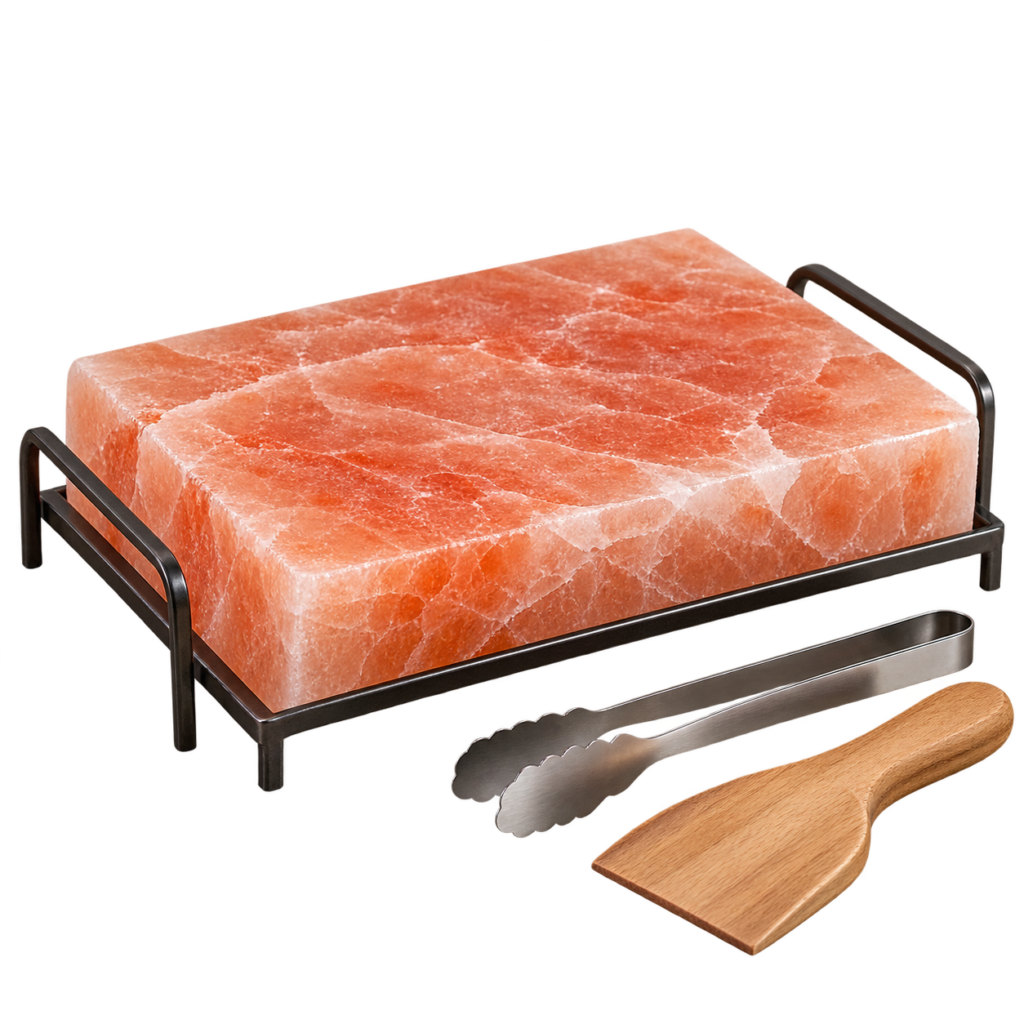
Five formats across cooking and presentation. Standard grilling blocks are cut thick enough to hold heat through a full service without cracking. Thin serving plates are for cold presentation and curing rather than direct heat, and cost a fraction of a cooking block. Large slabs suit restaurant grills and buffet stations. Round plates serve the retail and gift channel, where the format photographs well. Salt block sets pair a block with a stand and serving tools for retail packaging.
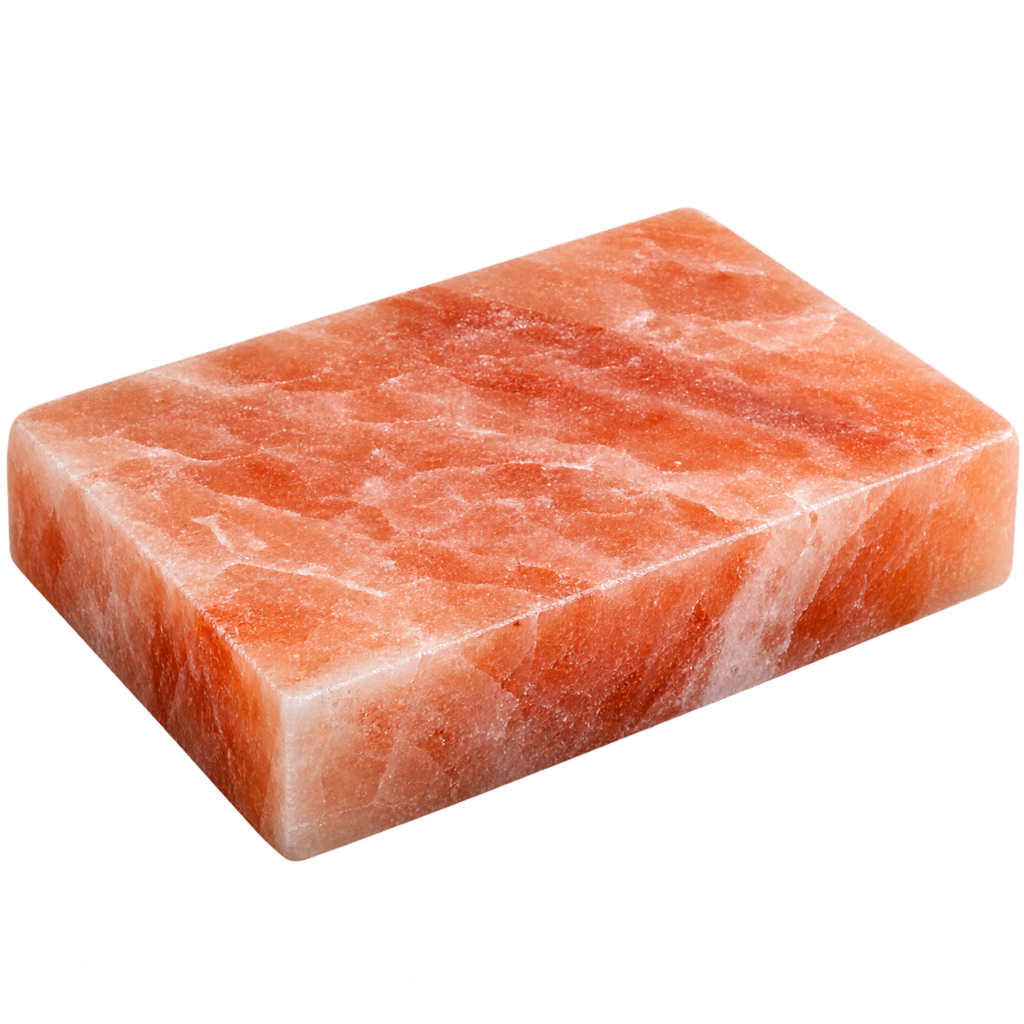
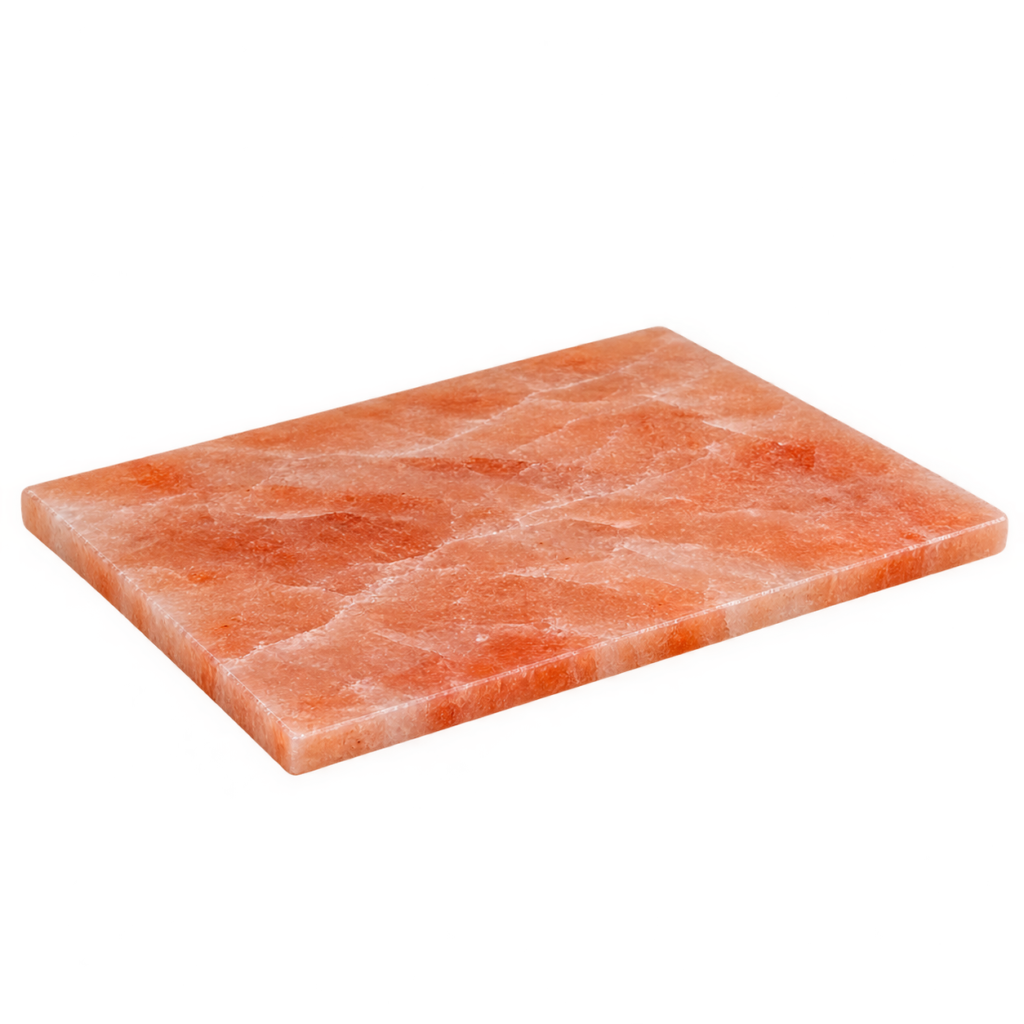
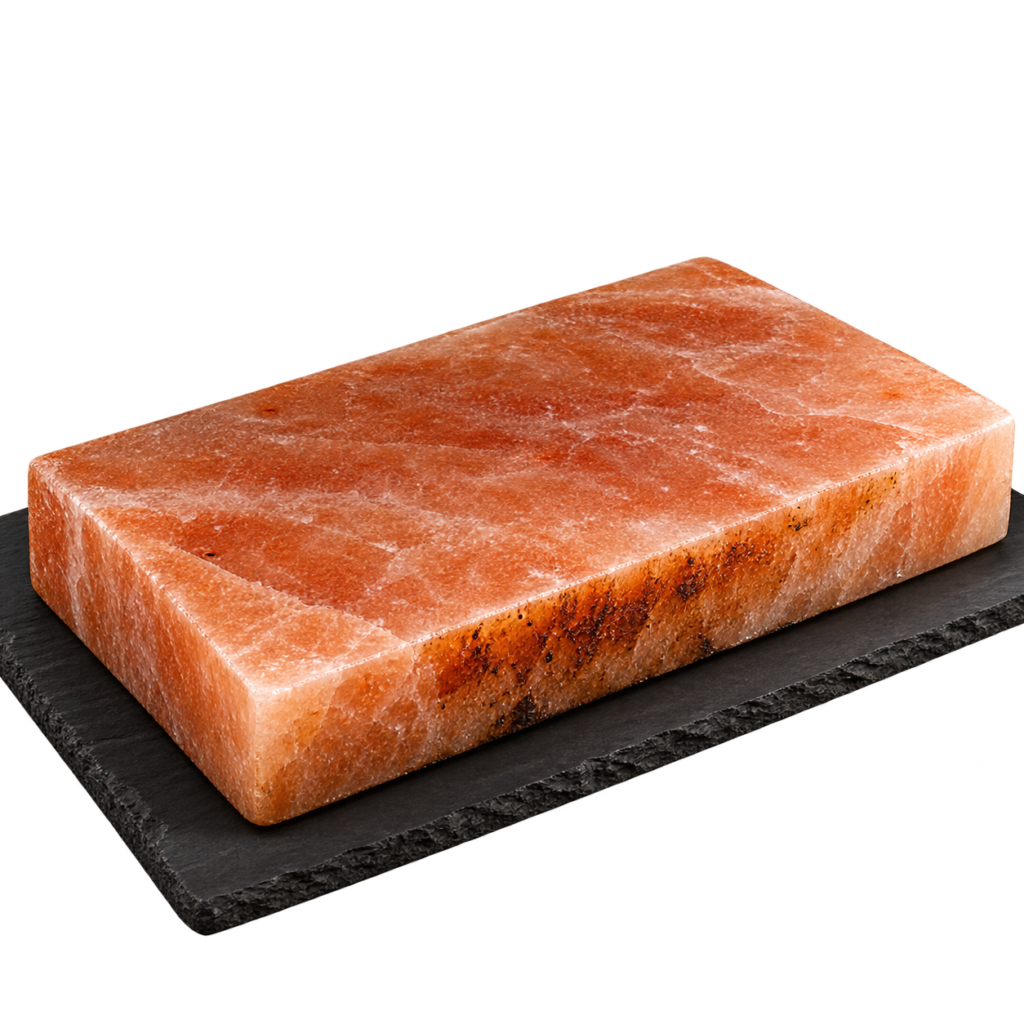
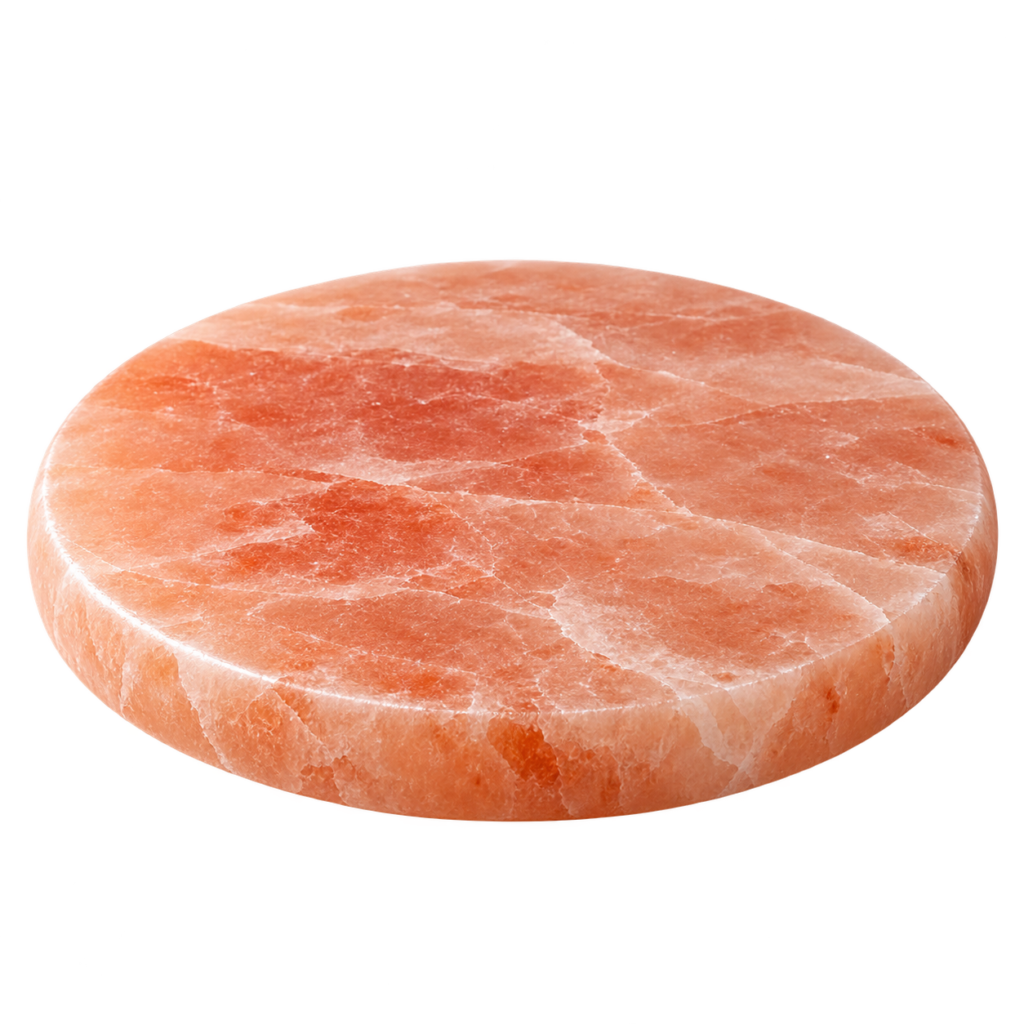
Almost every complaint in this category is the same complaint: the block split. It is a materials and selection problem, not a user error.
Salt blocks sell themselves on sight, which is precisely why so many end up as returns. A buyer sees a photograph of a glowing pink slab with scallops searing on it, orders a container, and discovers six weeks later that a meaningful share of them split in domestic kitchens. The product is sound. The selection behind it usually is not.
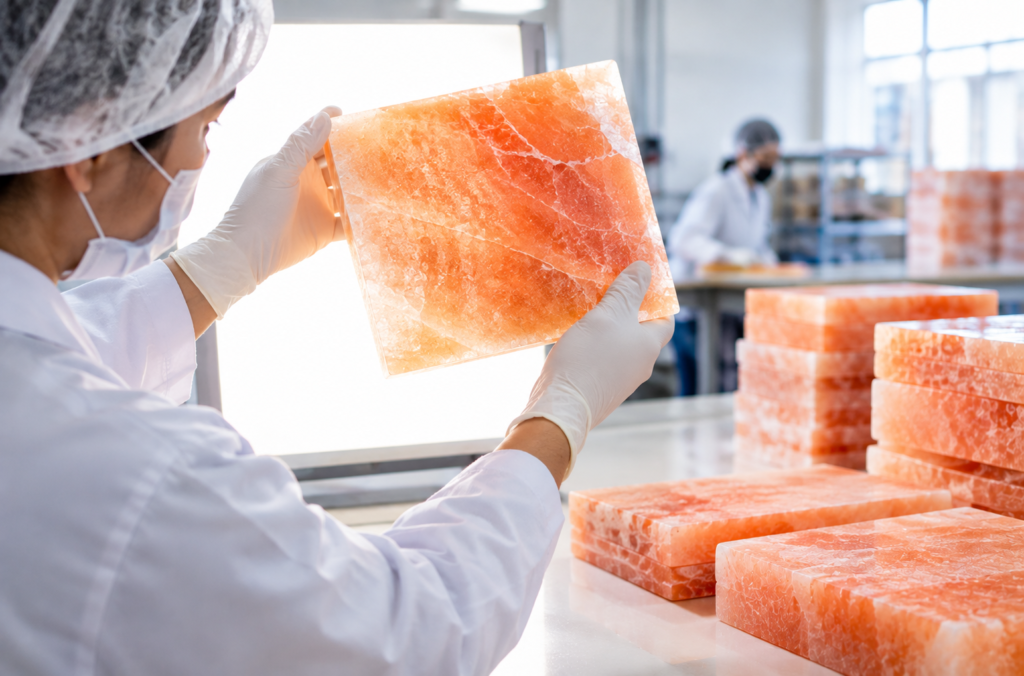
Cracking comes from three places, and all three are the supplier’s responsibility. Internal fissures are invisible on a cut face and split the block along their line the first time heat differentials open them up, so blocks have to be inspected and rejected rather than sold by weight. Insufficient thickness creates a steep temperature gradient between the hot face and the cool one, and salt has very little tolerance for that stress. Absorbed moisture turns to steam inside the block on first heating and fractures it from within.
We address all three before dispatch, and we are straightforward about the fourth cause, which is not ours: a block taken from a cold kitchen and placed on a hot grill will crack regardless of who made it. Salt blocks need heating in stages over twenty to thirty minutes. We supply that guidance with every order so it can go into your retail packaging or your distributor’s product sheet, because a customer who understands the product complains far less than one who does not.
The serving and curing formats carry none of this risk, since they never see direct heat, and they are worth stocking alongside cooking blocks as a lower-price entry to the category.
Blocks are also a consumable, which is a selling point worth making to your buyer rather than hiding. Salt erodes with use, and a well-treated cooking block has a working life measured in dozens of uses rather than years. That is not a defect, it is the nature of the product, and a distributor who positions it honestly gets repeat orders instead of complaints. The retailers who struggle in this category are the ones who let a customer believe a salt block is permanent kitchenware and then argue with them eight months later.
We supply restaurant and foodservice distributors, kitchenware and homeware retailers, DTC and gift brands, hotel groups, and private label programmes across 45 countries. Our export team can advise on thickness against intended use, format mix for your channel, and retail packaging.

WhatsApp us