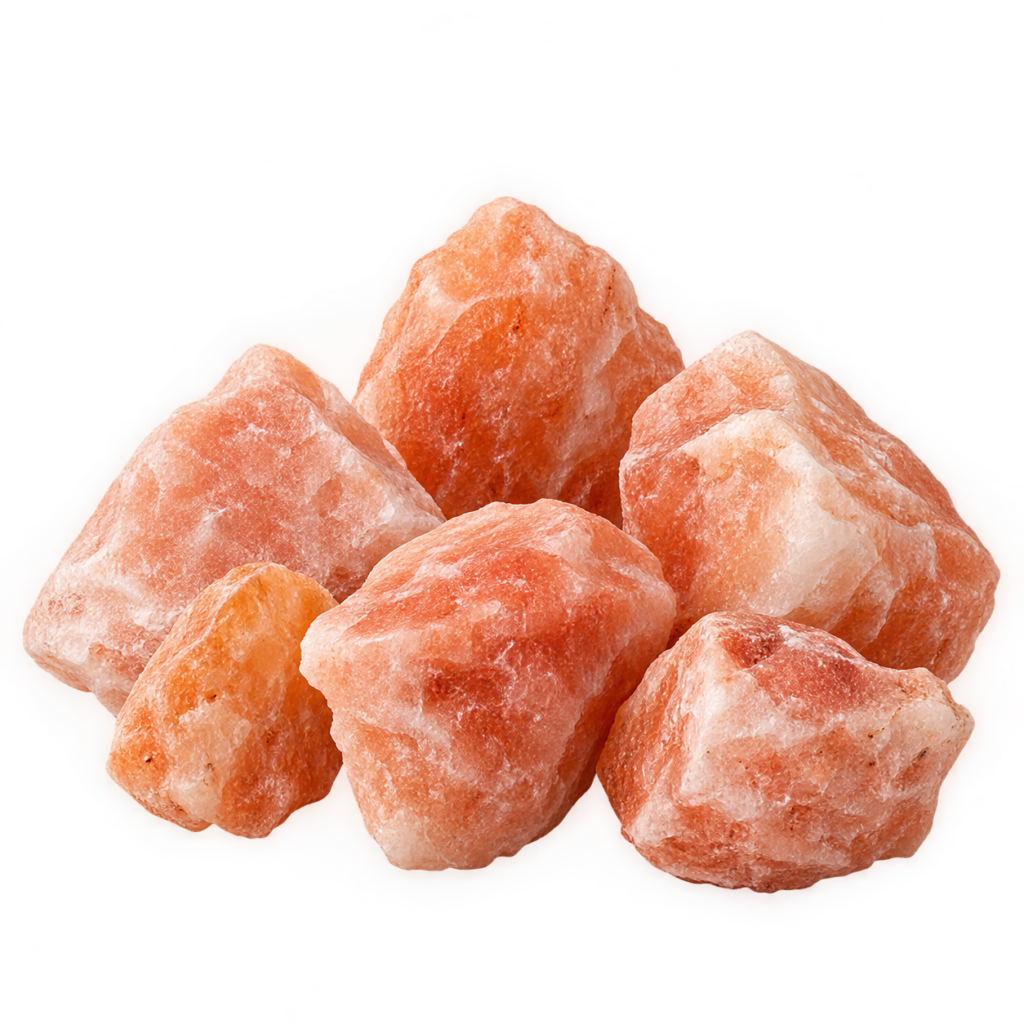
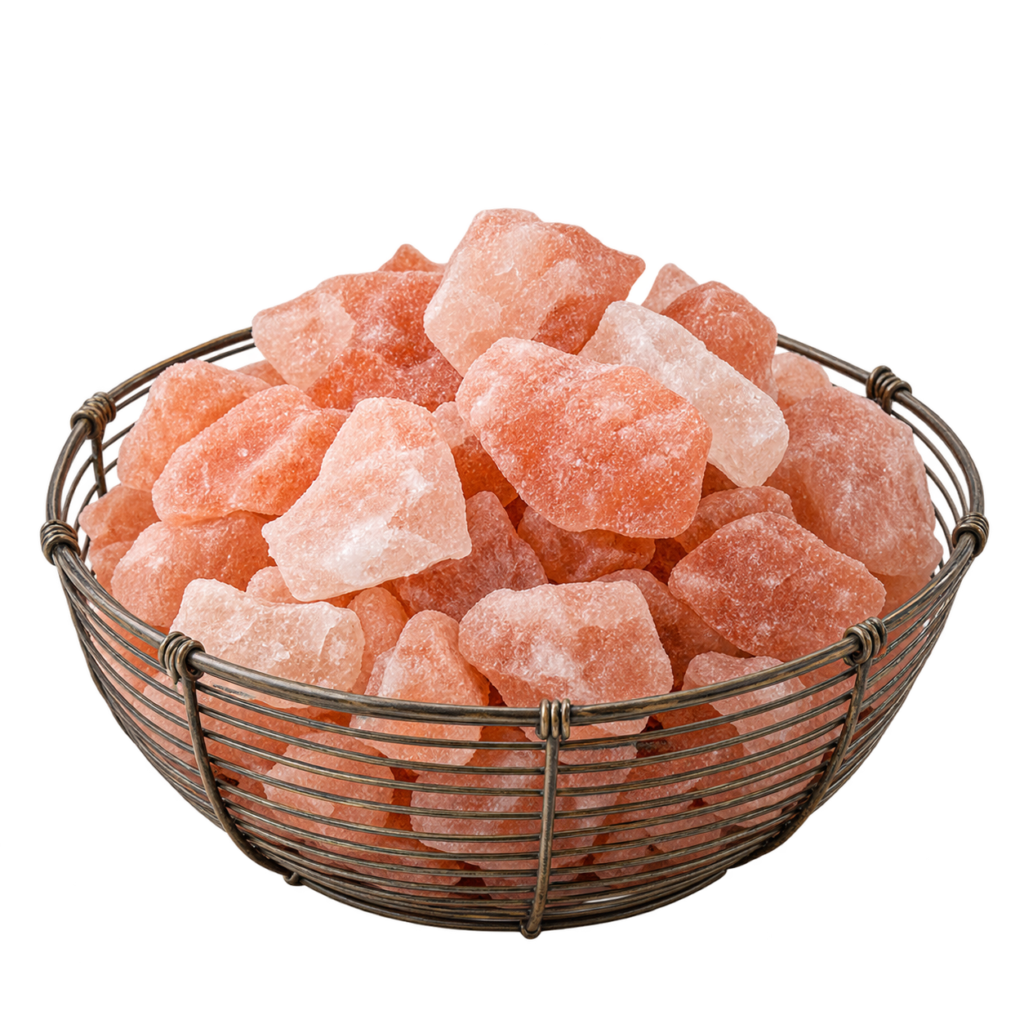
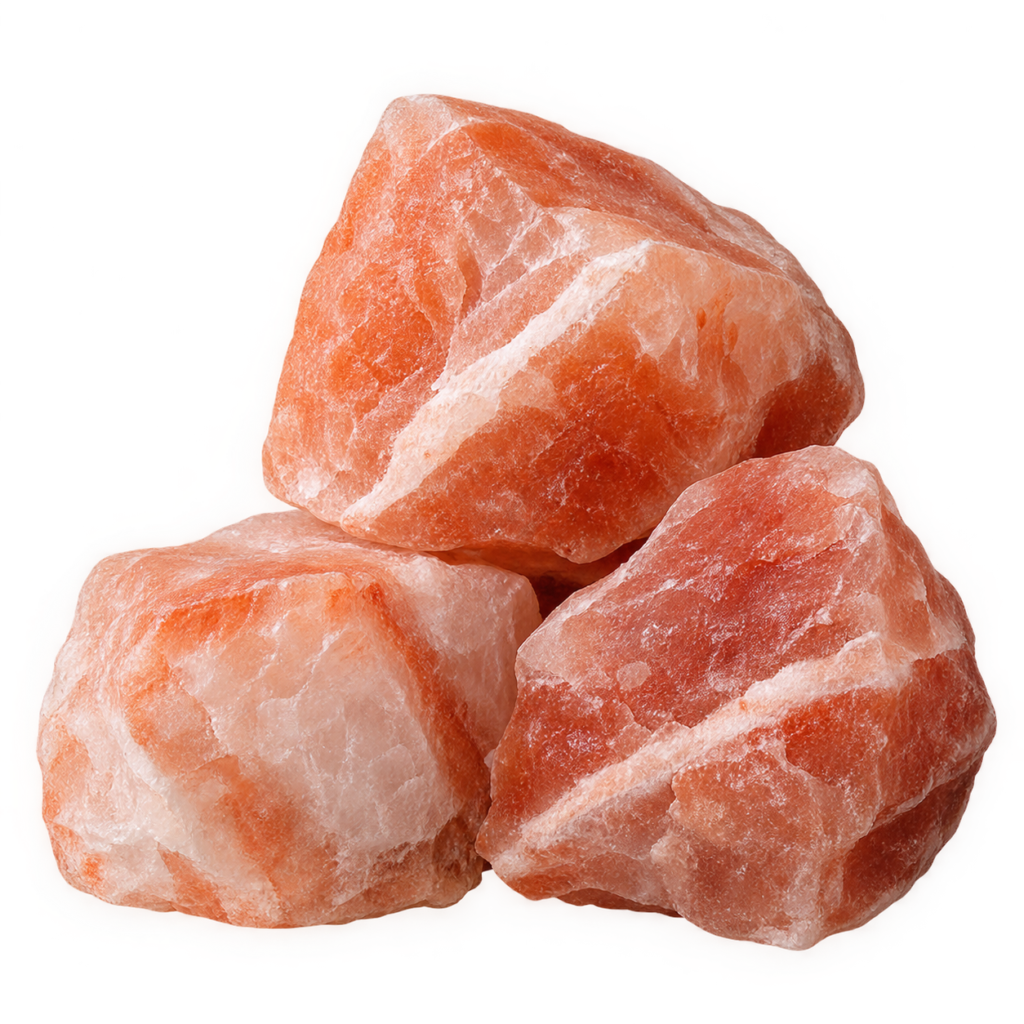
Natural Himalayan salt chunks in graded sizes, supplied by the tonne to processors, repackers, decorative retailers, and salt lamp assemblers. Sold as unmilled raw material for crushing and further processing, as fill for pink salt bowls and baskets, and as decorative product in its own right. Graded by size band and packed for efficient container loading, because freight is the dominant cost in this line and void space is where margin quietly disappears.
Five size bands covering processing, decorative, and lamp-fill applications. Small chunks are the standard fill for salt bowls, wire baskets, and wrought iron holders, where uniform size matters to the finished look. Medium chunks suit decorative retail display and coarse grinder packs. Large chunks are bought as raw material for crushing and milling, where the buyer cares about yield rather than appearance. Extra large pieces serve carving, sculpture, and feature display. Mixed grade is the economical option for buyers crushing everything down regardless of input size, and prices accordingly.
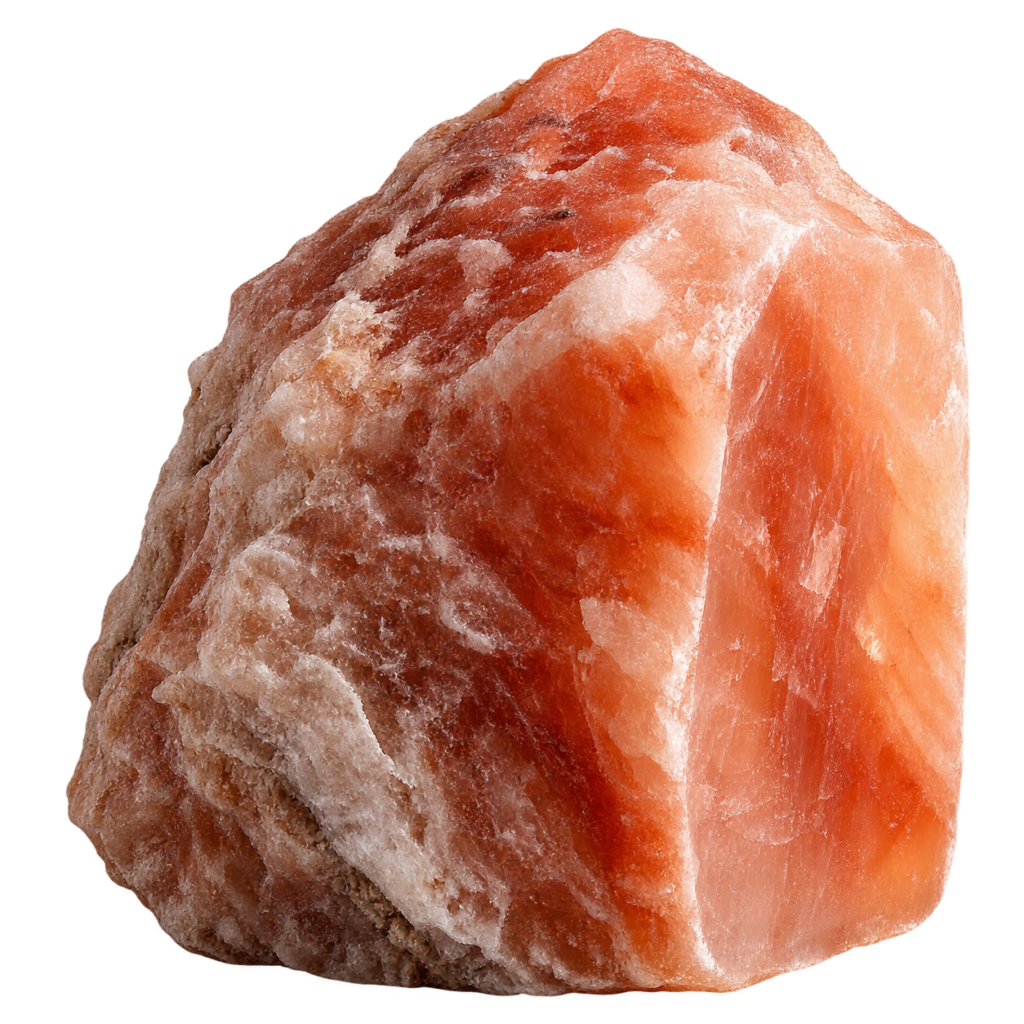
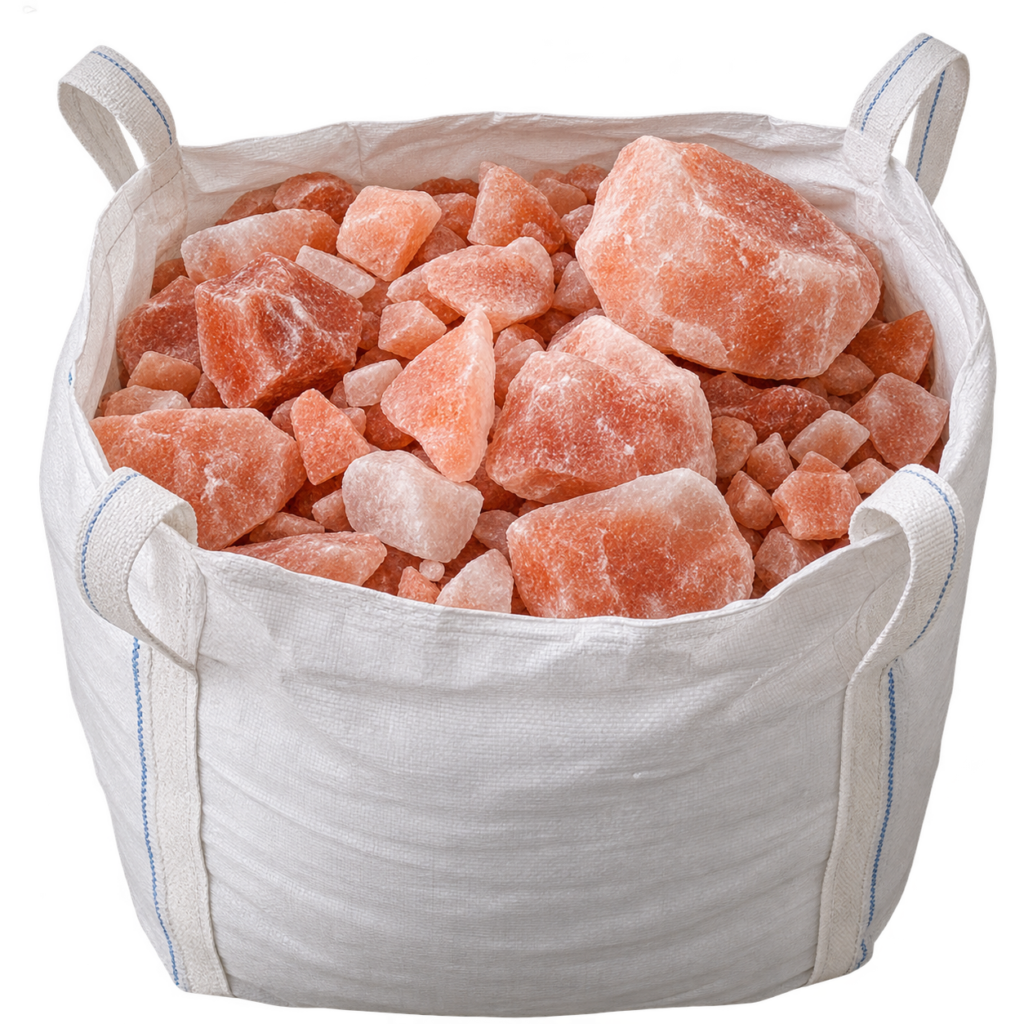
Chunks are the lowest value-add product in the pink salt range, which makes freight cost and yield the entire commercial argument.
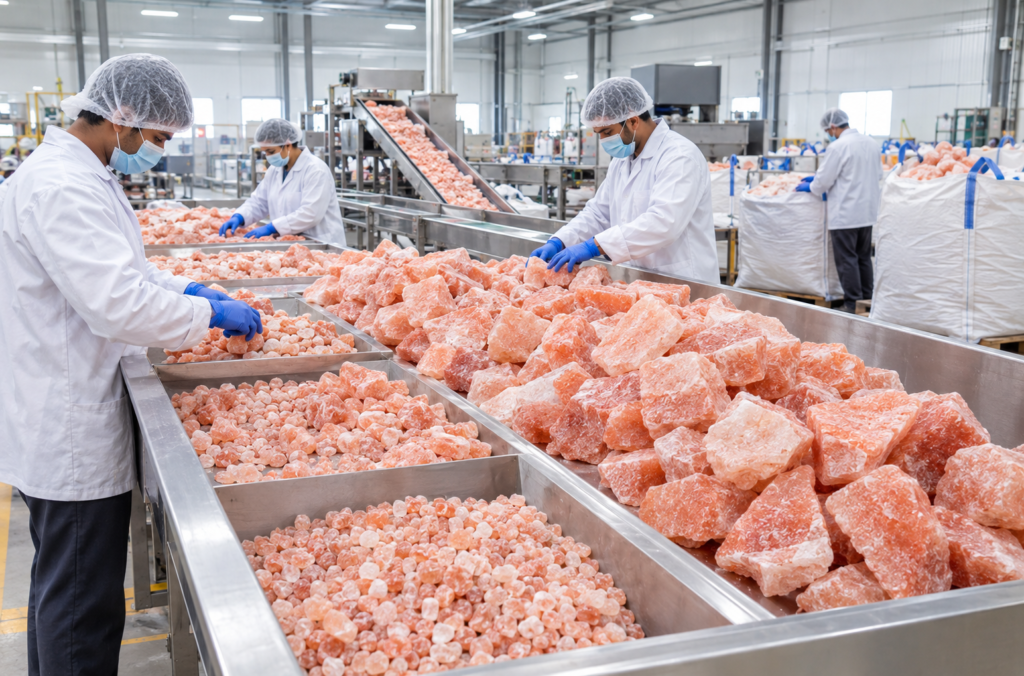
Chunks are bought by two very different customers, and they want opposite things. Processors want raw material with predictable crushing yield and do not care in the slightest what it looks like. Decorative and lamp-fill buyers want consistent colour and attractive shape and do not care about yield at all. A supplier who treats both as one undifferentiated product manages to disappoint both at once.
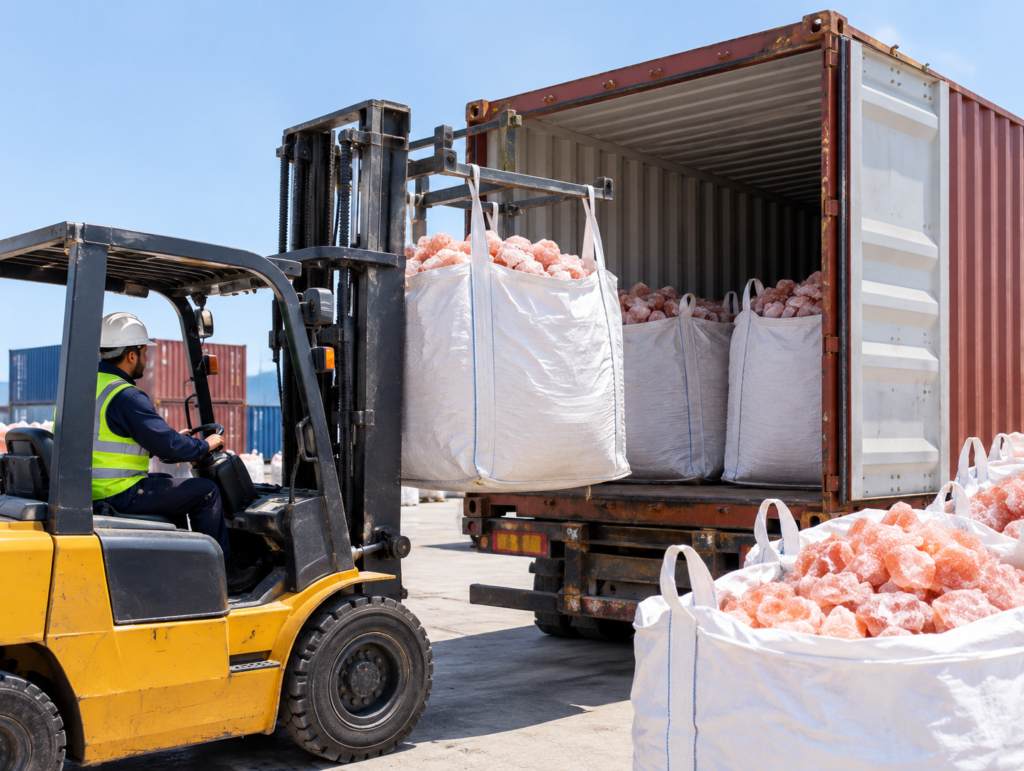
We grade and select accordingly. Processing customers get consistent size bands, because input consistency is what keeps their screen settings stable and their yield predictable across a run. Decorative and lamp-assembly customers get colour-selected chunks with reasonable shape uniformity, because their end product is judged on a shelf rather than through a crusher. Both get packing designed around container weight rather than around ease of loading, which matters more here than in any other line — chunks pack badly by nature, and a poorly loaded container can cost several tonnes of paid-for capacity in void space alone.
Freight is worth dwelling on, because it is usually the largest single component of landed cost for this product. A twenty-foot container of milled salt loads considerably heavier than the same container of chunks, and the gap widens as chunk size increases. Buyers comparing quotes on unit price alone routinely choose the more expensive option without realising it. We will model the loading for your specific size band and route before you commit, so the comparison you make is the right one.
Colour is the other variable that separates the two buyer types, and it is worth being direct about. Himalayan pink salt is not one colour. It runs from pale blush through to deep rose depending on the seam and the depth it came from, and no supplier can deliver a uniform tone across a container without selecting for it, which costs time and yield. Where the chunks are being crushed, that selection is money wasted. Where they are going into a lamp basket or a retail display, it is the entire product. We price the two differently rather than charging every buyer for a service only half of them need.
We supply salt processors and repackers, grinder-pack producers, salt lamp and homeware assemblers, decorative and gift wholesalers, and salt room contractors across 45 countries. Our export team can advise on size band selection for your process, colour selection where appearance matters, and container loading optimisation for your route.
WhatsApp us