Himalayan salt reaches our facility from the Salt Range in Punjab and leaves it as food-grade bulk, retail-ready private label, carved lamps, livestock licks, or construction brick. Every stage between happens in-house, across a site running more than fifty tonnes of daily production with over two hundred staff, under BRCGS Global Standard Food Safety Issue 9 at Grade AA. This page sets out what actually happens at each stage, because provenance claims are only worth what can be shown behind them.
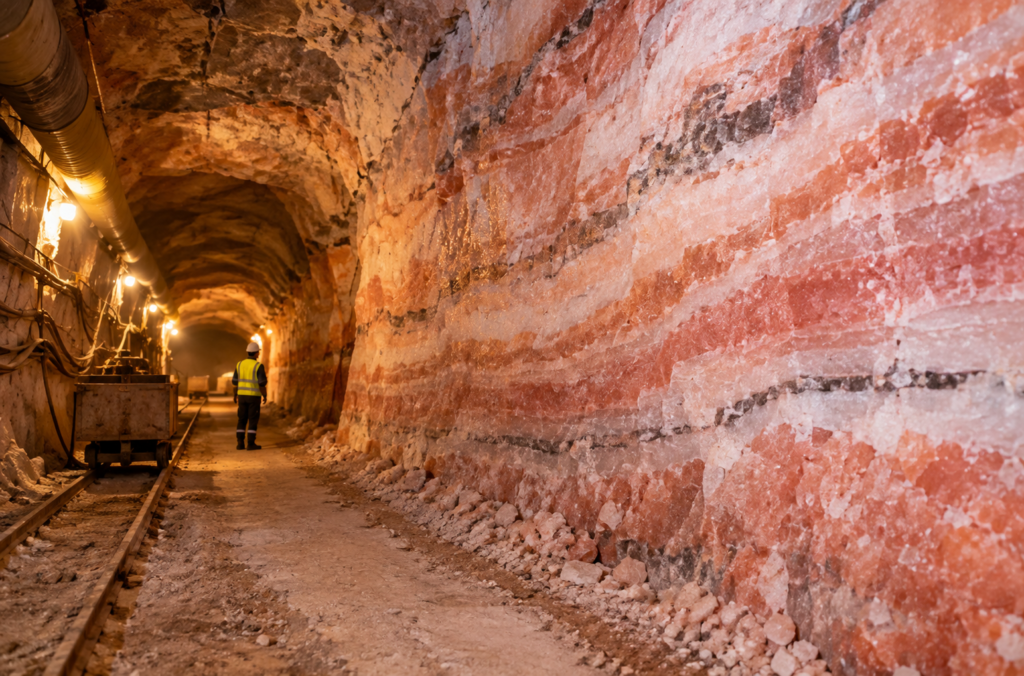
The Salt Range in Punjab is the only genuine geological source of Himalayan pink salt. The deposits formed from an evaporated ancient sea and run in seams that vary in colour and mineral composition with depth and location — which is why pink salt is not one uniform product and why seam selection matters more than most buyers realise.
Salt marketed as Himalayan from anywhere else is either mislabelled or mined elsewhere and coloured by association. We source directly from the Salt Range rather than buying in to fill orders, which is what allows us to draw repeat orders from consistent seams instead of from whatever is available that month. For a buyer repacking under their own brand, that consistency is the difference between a product that looks the same across shipments and one that quietly shifts shade between containers.
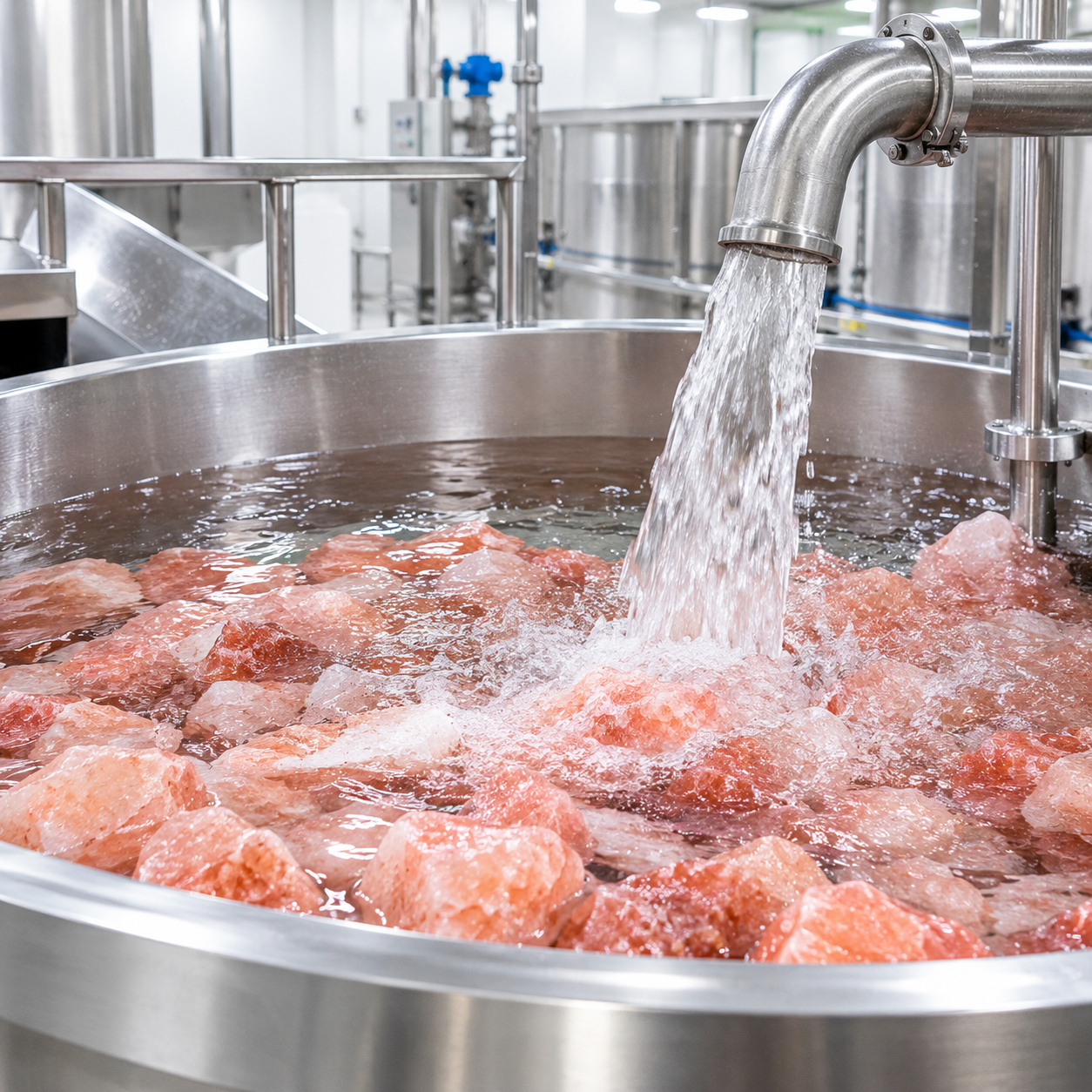
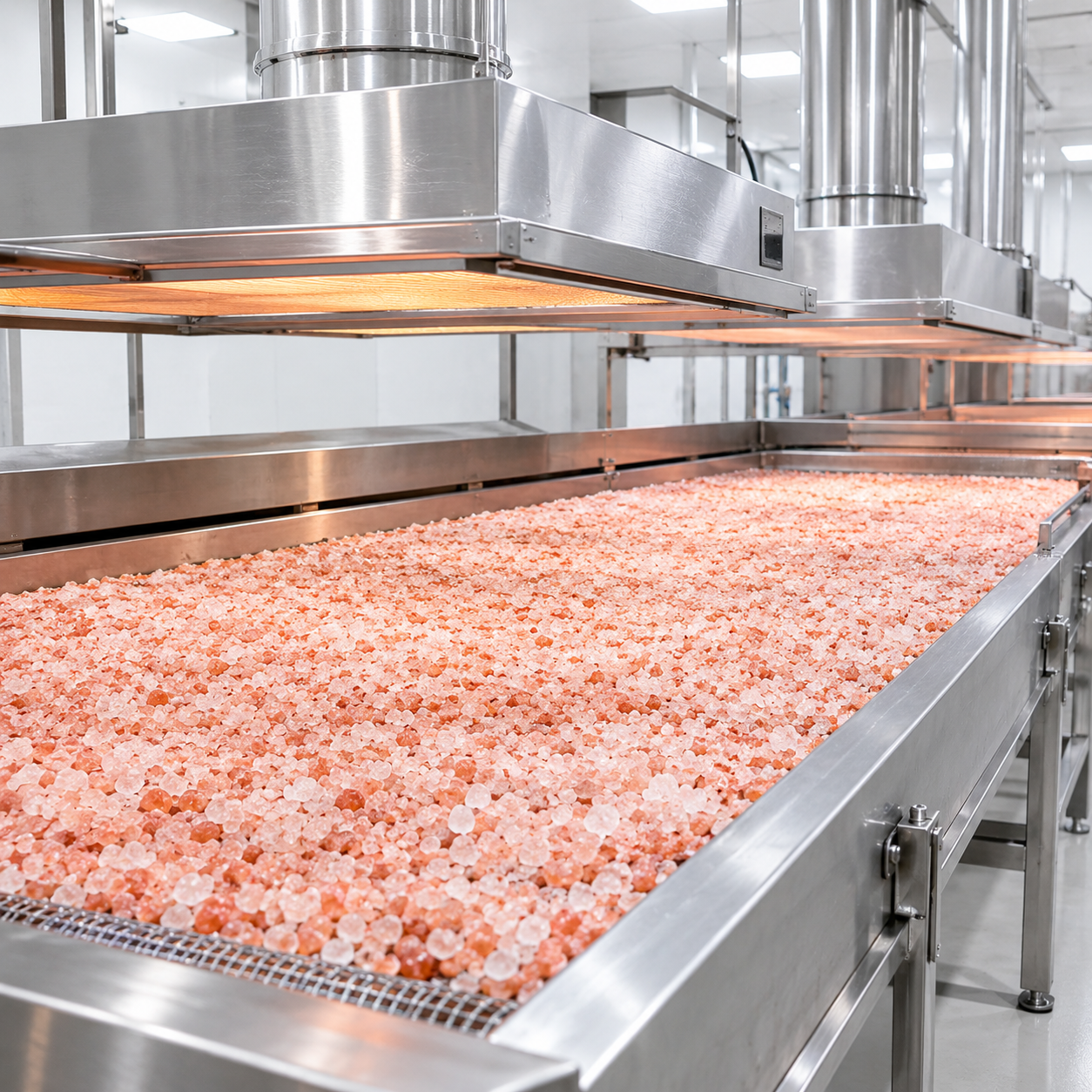

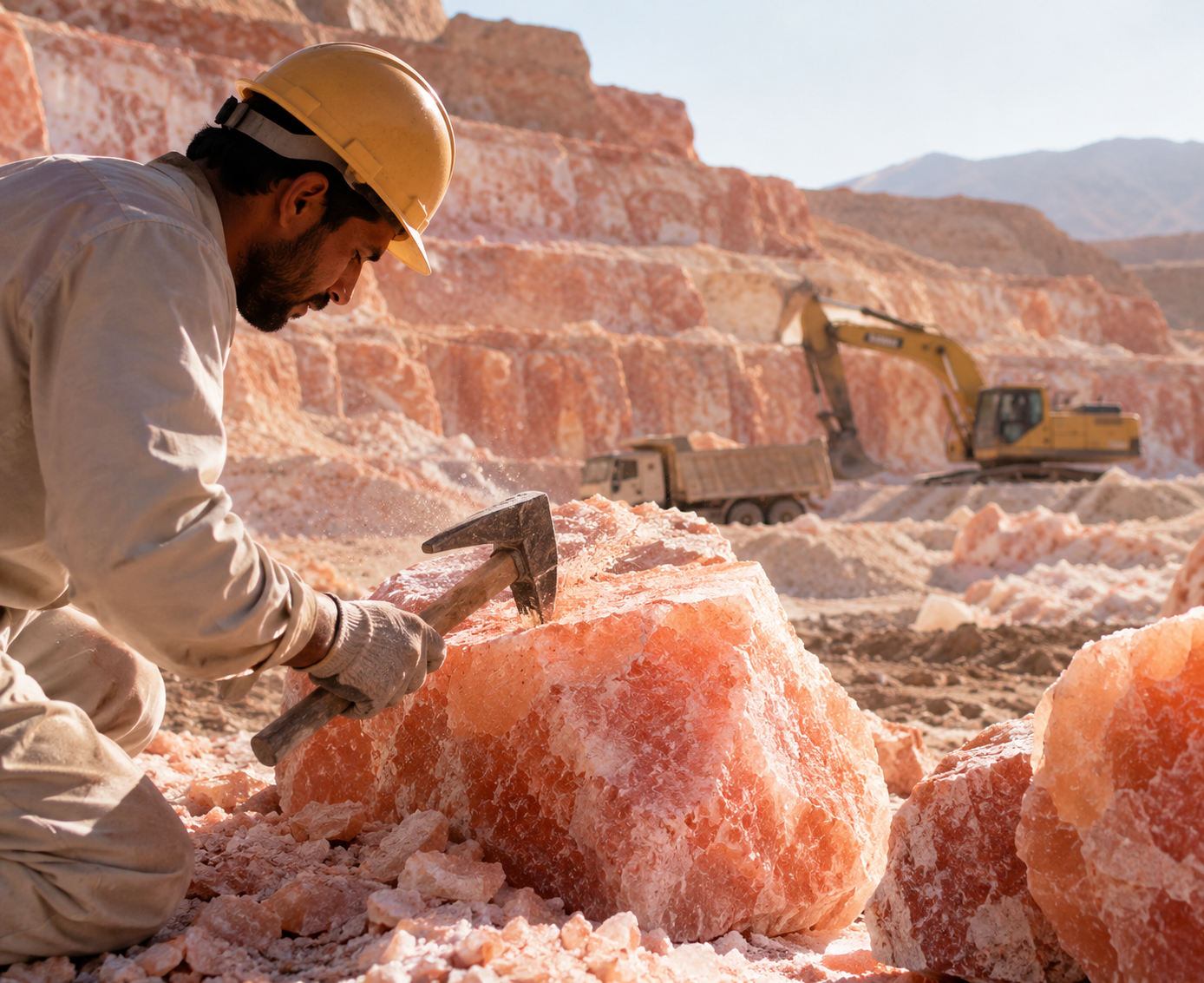
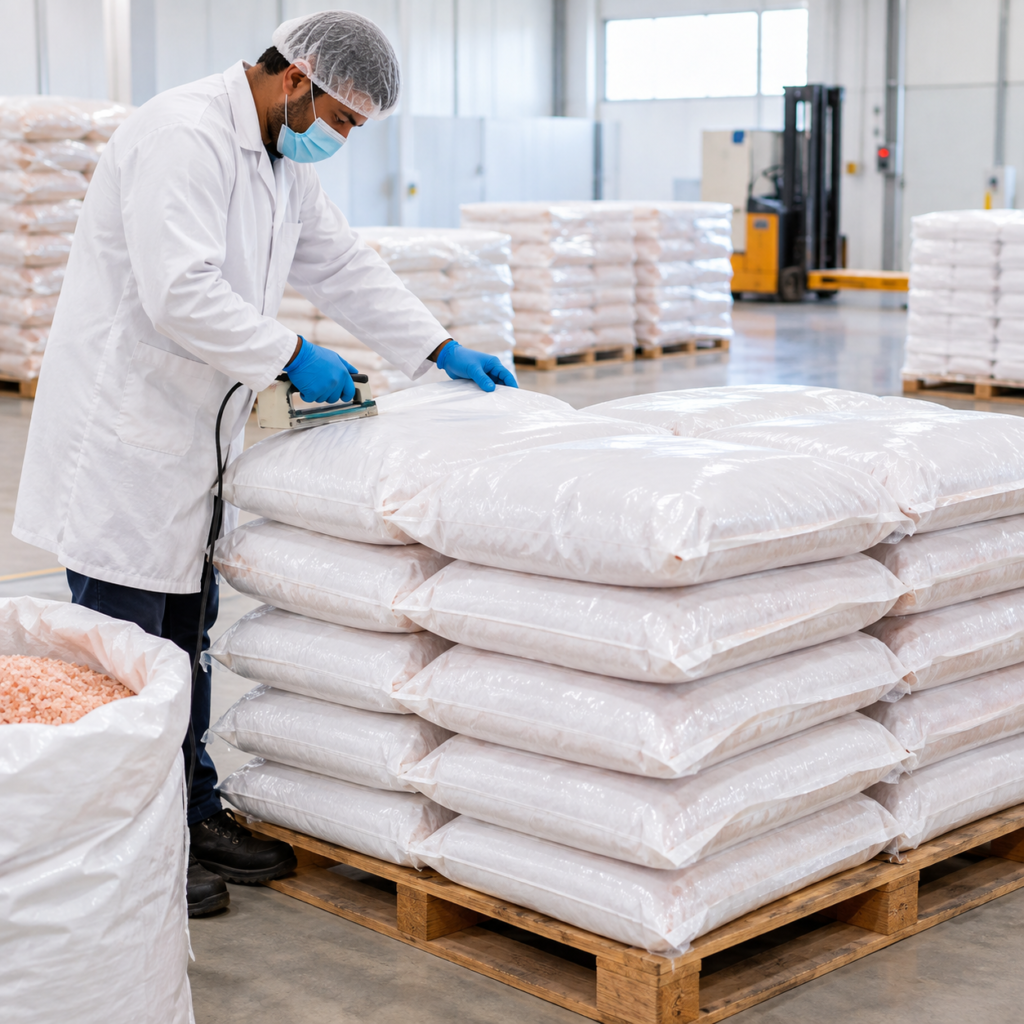
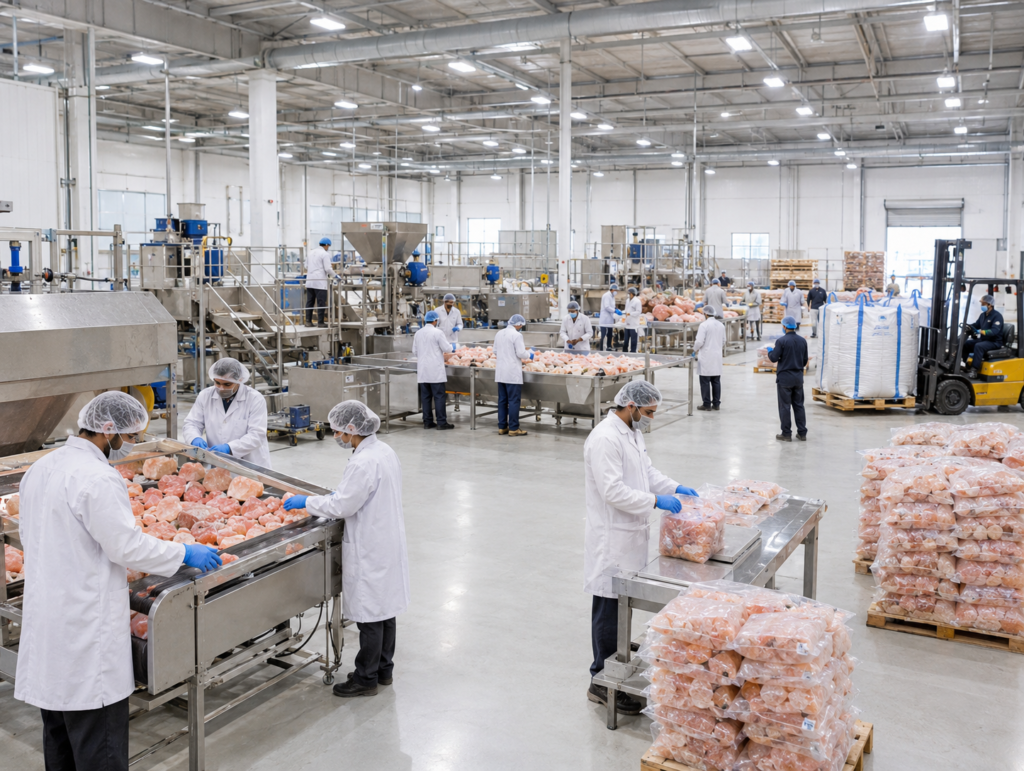
Capacity is the question buyers ask third, after price and specification, and the one that quietly decides whether a supply relationship survives its second year. A supplier who fills a first container and then struggles with the fourth creates a worse problem than one who declined the business, because by then a product line, a listing, and a customer expectation have all been built on top of it.
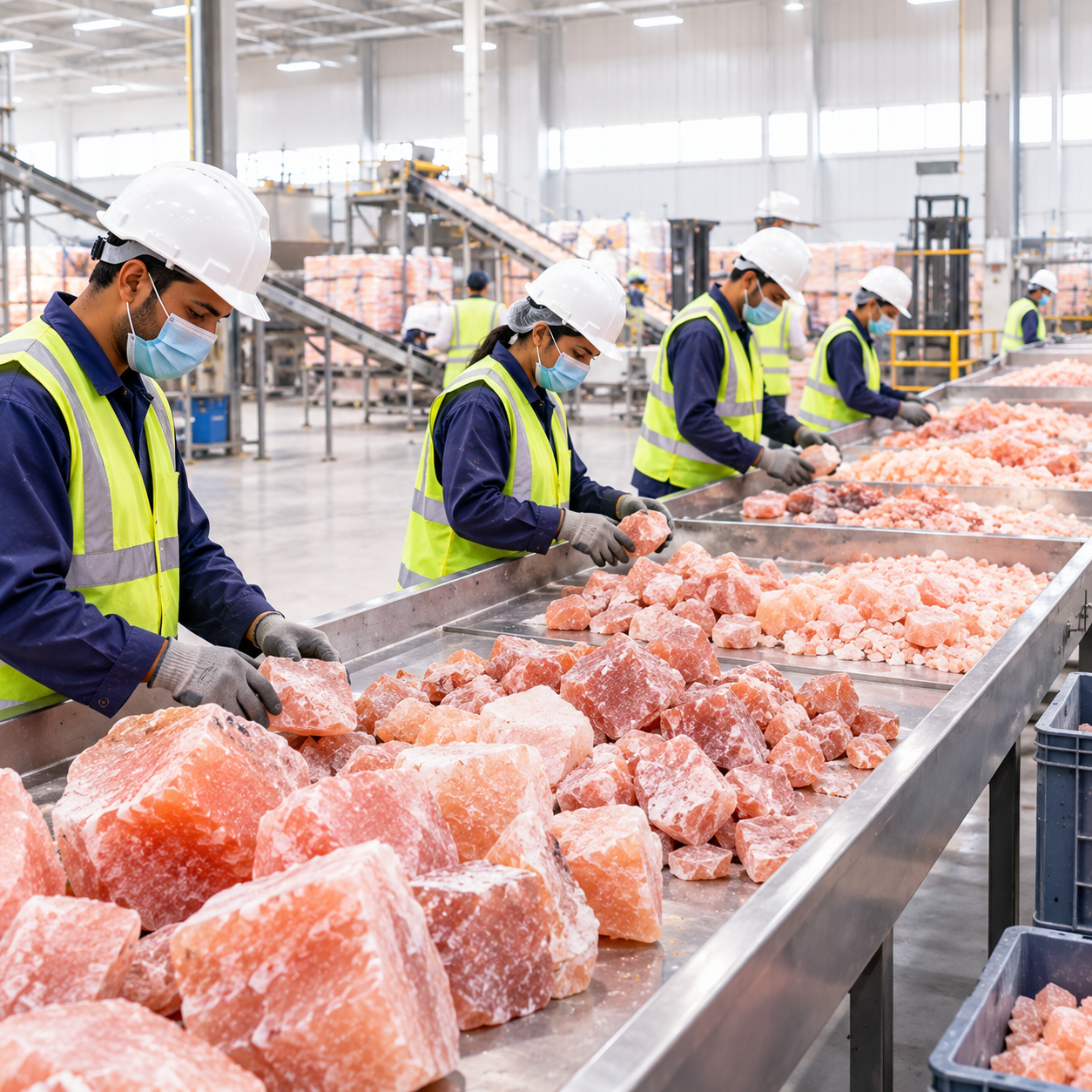
Our facility runs over fifty tonnes of daily production with more than two hundred staff across mining, processing, carving, quality control, packing, and export administration. That capacity is what lets us hold grading consistency across repeat shipments rather than loosening a specification to meet a quantity, and absorb seasonal peaks without pushing lead times out.
Certification covers the system. What it looks like day to day is a set of controls applied at specific points in the process.

Traceability is the requirement that most Himalayan salt supply chains fail, and it fails for a structural reason rather than a careless one. When salt passes through a trading house, the trader cannot evidence which mine, which seam, or which production run a given container came from, because it bought finished goods rather than producing them. The paperwork stops at the trader.
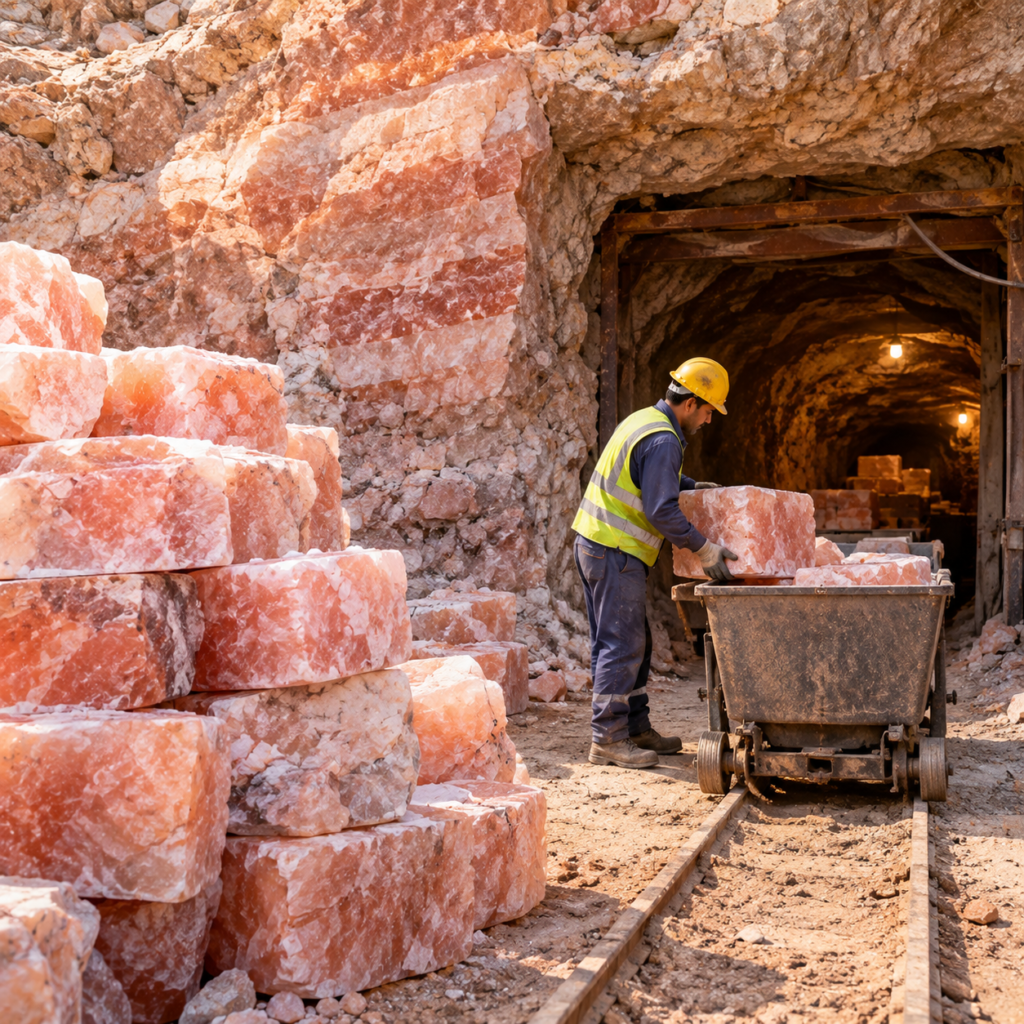
Because we mine, process, and pack ourselves, the chain of custody is continuous and documented. A production lot can be traced back through packing, milling, drying, washing, and sorting to the material it came from. For a buyer evidencing provenance to a retailer, completing a supplier approval file, or responding to an auditor, that is the difference between producing a record and making an assurance.
We would rather you came and looked. Buyers placing container volumes are welcome to visit the facility, and we host customer and third-party audits as a matter of routine rather than as an exception. If travel is not practical, we can arrange a live video walkthrough of the production areas relevant to your order, which most buyers find settles the questions a specification sheet cannot.
Supplier questionnaires, audit report summaries, certification documents, and facility photographs are available on request and usually go out the same working day.

WhatsApp us