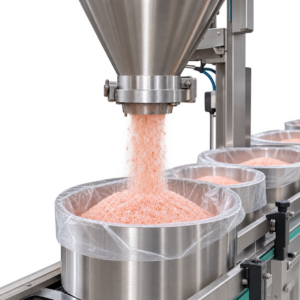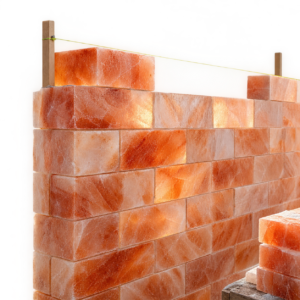
The same Himalayan salt reaches a food manufacturer, a spa operator, a cattle farmer, and a salt room contractor as six genuinely different products, with different grading, different packaging, and entirely different documentation behind each. We supply all six from our own facility at the foothills of the Salt Range in Pakistan, under BRCGS Global Standard Food Safety Issue 9 at Grade AA, to buyers in 45 countries. Find the guidance written for your sector below.
Food manufacturers need audit-ready traceability and batch consistency above everything else. Private label brands need low first-run minimums, artwork support, and colour that holds on a shelf. Spa and wellness buyers work under cosmetic regulation rather than food, which changes the entire paperwork trail. Livestock distributors need solid-cut blocks that survive a wet season in a field. Foodservice buyers need pack formats and pricing that work per cover. Salt room contractors need a building material cut to tolerance. Each page below is written for its own buyer.
Most Himalayan salt suppliers sell one product to every buyer and leave the buyer to work out whether it fits.
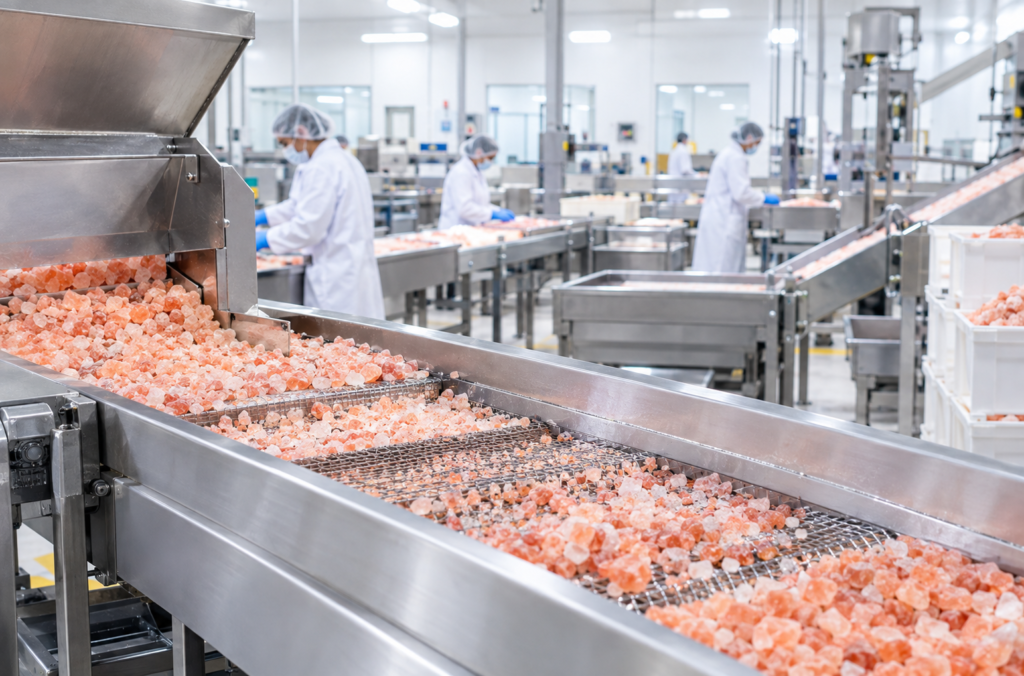
The commercial mistake most buyers make with Himalayan salt is assuming it is a commodity and sourcing it accordingly. In raw material terms it very nearly is. In supply terms it is not, because what separates a workable supplier from an unworkable one has almost nothing to do with the salt and almost everything to do with grading discipline, documentation, and whether the supplier understands what happens to the product after it leaves the container.
A food manufacturer who takes delivery of salt with inconsistent particle distribution discovers it on the production line, not at goods-in. A wellness brand that cannot produce an INCI statement discovers it when a retailer’s compliance team asks, usually two weeks before launch. A feed distributor selling pressed blocks discovers it when the first wet season dissolves them. A salt room contractor discovers dimensional variance thirty courses up a wall. In each case the problem was created at the supplier and surfaced at the customer, which is the most expensive place for it to appear.
We structure supply around those failure points rather than around a single price list. That means six specifications, six packaging approaches, six documentation sets, and six minimum order policies, all drawn from the same certified seams and the same facility. It costs us more in production complexity than running one grade would. It also means that what arrives is what your application actually needs.
Price is where most buyers start the conversation, and it is worth being direct about where we sit. Buying direct from a manufacturer removes a trading margin, which usually makes us competitive against an intermediary on identical specification. It does not make us the cheapest quote you will receive, because the cheapest quote in this category almost always reflects a looser grade, mixed sourcing, or documentation that has not been prepared. Compare on landed cost against a stated specification rather than on unit price, and the picture generally resolves.
We supply buyers in 45 countries across Europe, North America, the Gulf, Asia, Africa, and Australasia, from single trial pallets through to regular full-container programmes. Most enquiries are answered the same working day over WhatsApp.
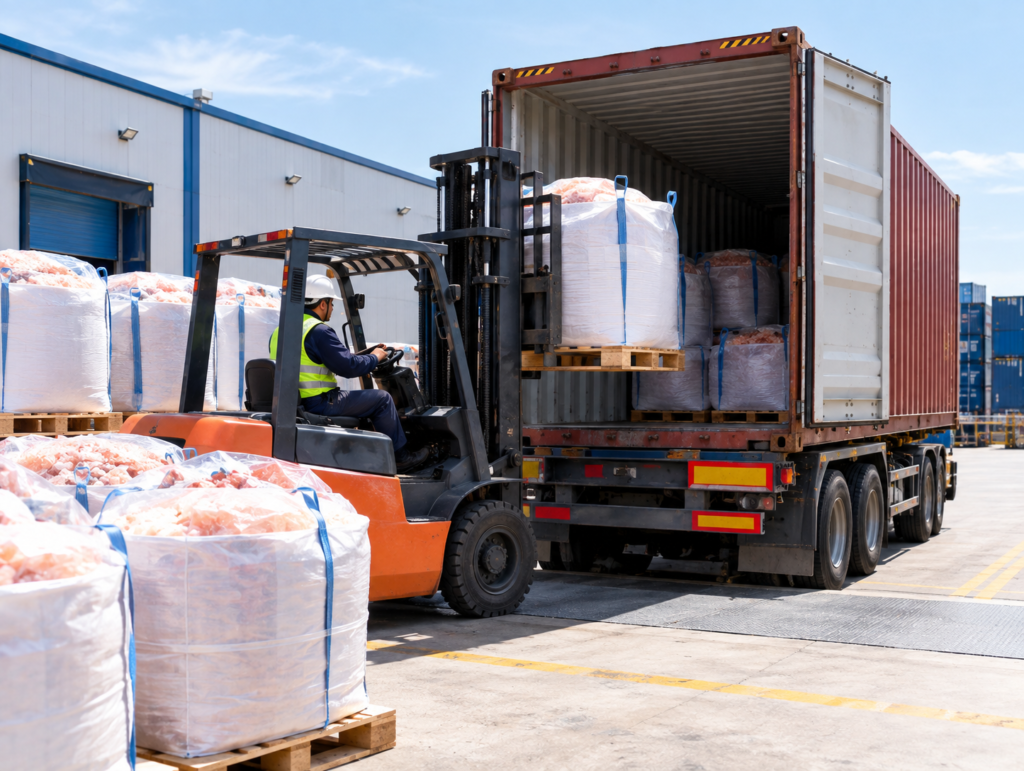
Scale is the question every serious buyer asks third, after price and specification, and it is the one that quietly decides whether a supply relationship survives its second year. A supplier who can fill a first container and then struggles with the fourth creates a worse problem than one who declined the business outright, because by then you have built a product line, a listing, and a customer expectation on top of it.
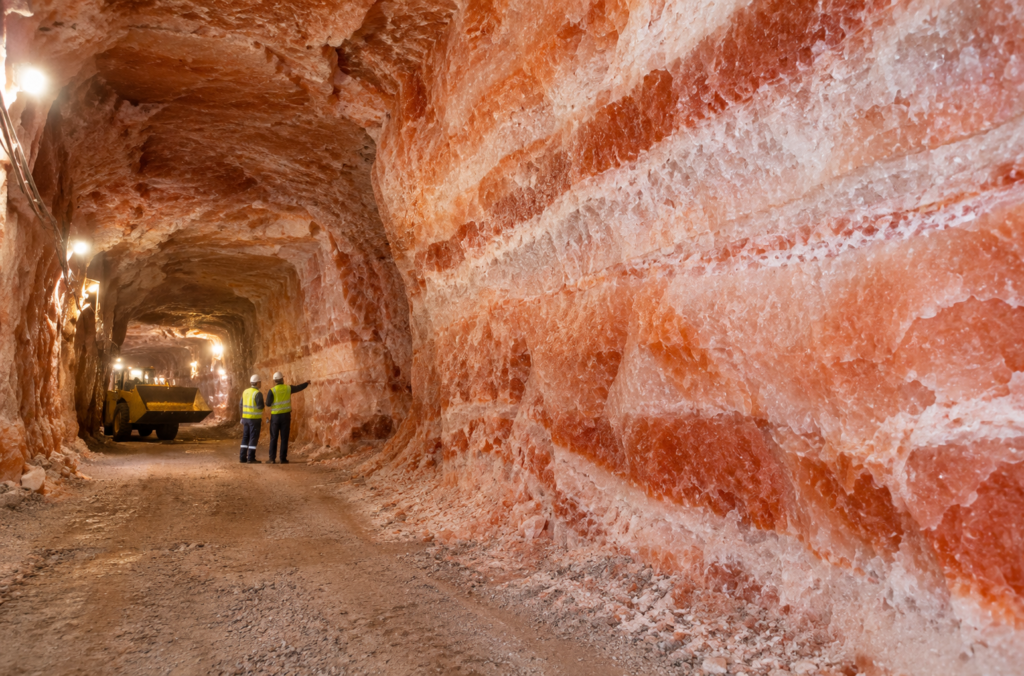
Our facility runs over fifty tonnes of daily production with more than two hundred staff, drawing from the Salt Range deposits in Punjab — the only genuine geological source of Himalayan pink salt anywhere. That capacity is what allows us to hold grading consistency across repeat shipments rather than filling orders from whatever is available, and to take on seasonal peaks without pushing lead times out. Whichever sector you buy in, the answer to whether we can scale with you is the same.
WhatsApp us