
We supply Himalayan pink salt to importers, food manufacturers, retail brands, and distributors across sixteen European markets, from our BRCGS Grade AA certified facility at the foothills of Pakistan’s Salt Range. Pakistani-origin goods enter the EU duty-free under GSP+, and we prepare the registered exporter origin statement that claim requires. Bulk food grade, grinder granules, bath and wellness products, lamps, and construction-grade salt.
Europe orders across the full range rather than concentrating in one category. Grinder granules and bulk rock salt lead, supplying grocery private label, repackers, and food manufacturing. Table grades serve retail packing and foodservice. Salt lamps are strongest in the UK and Ireland. Bath salt and salt soap supply drugstore and wellness channels across the Nordics, Germany, and Benelux. Construction-grade bricks and tiles supply a halotherapy sector growing fastest in Germany, Poland, and the UK.
Duty-free access under the UK's own developing countries scheme. Food under FSA; lamps need UK electrical specification; cosmetics require a UK responsible person. Lamp-led market — unusually strong for Europe.
Largest single EU market, ordering across the full range. National food law runs alongside EU regulation and covers food-contact materials. Buyers expect lot-referenced heavy metal analysis — a generic spec sheet ends the conversation.
Rotterdam redistributes to Germany, Belgium, France, and Scandinavia. Dutch buyers are redistributors — bulk formats, tight particle consistency, and pass-through documentation matter most.
French-language labelling required with EU nutrition declaration format. Edible grades lead; bath and wellness products strong through pharmacy and parapharmacie channels. Marseille serves the south.
Demand concentrates in edible for food manufacturing, specialty retail, and foodservice. Salt cooking blocks growing in restaurant supply. Specialty food retail rewards provenance documentation over price.
Spanish-language artwork serves Mexico, Colombia, and Ecuador too — one investment across four markets. Algeciras is often the fastest call as a major transhipment hub.
Major EU repacking and distribution hub — commercially larger than domestic consumption suggests. Repackers redistribute into central and eastern Europe. Bulk formats and particle consistency lead.
Nordic retail expects sustainability documentation and clean labelling. Untreated salt with no anti-caking agent suits clean-label positioning. Bath and wellness products strong through pharmacy channels.
Not in the EU — GSP+ does not apply. Own food law with labelling required in German, French, or Italian depending on canton. Specify Swiss shipments separately — EU compliance does not carry over.
Nordic grocery and wellness retail with expectations similar to Sweden. Many shipments route via Hamburg or Rotterdam and move north overland. Edible grades lead; bath products strong through pharmacy.
One of the fastest European calls — Piraeus sits at the eastern Mediterranean. Demand centres on edible for food manufacturing and a large seasonal hospitality sector. Plan well ahead of summer peaks.
Serves domestic distribution and onward movement into the Balkans and Turkey. Many shipments route via Piraeus or Constanța. Bulk and repacking formats lead over finished retail.
Strong domestic salt industry makes pink salt a specialty position — buyers purchase for differentiation. Skews toward lamps rather than edible, unusual for the region, worth reflecting in product mix.
English as an official language removes translation cost. Significant Mediterranean transhipment hub — some buyers use it as a staging point rather than an end market. Volumes modest and easy to serve.
Outside the EU — own tariff treatment applies. Often transhipped via Italian or Greek ports. Demand skews toward lamps and decorative formats rather than bulk edible.
Landlocked — routes via Durrës or Thessaloniki with an overland leg. Separate customs from both the EU and Albania. Smallest European market; demand concentrates in lamps and decorative product.
Pakistan holds GSP+ status with the European Union, which gives qualifying goods duty-free access across all EU member states. This materially changes the landed-cost comparison against alternative origins, but only where the origin claim is documented correctly — the preference is not automatic, and an importer who assumes it applies without a valid statement on origin from a registered exporter pays full duty on a shipment they priced without it. We prepare that statement with every shipment.
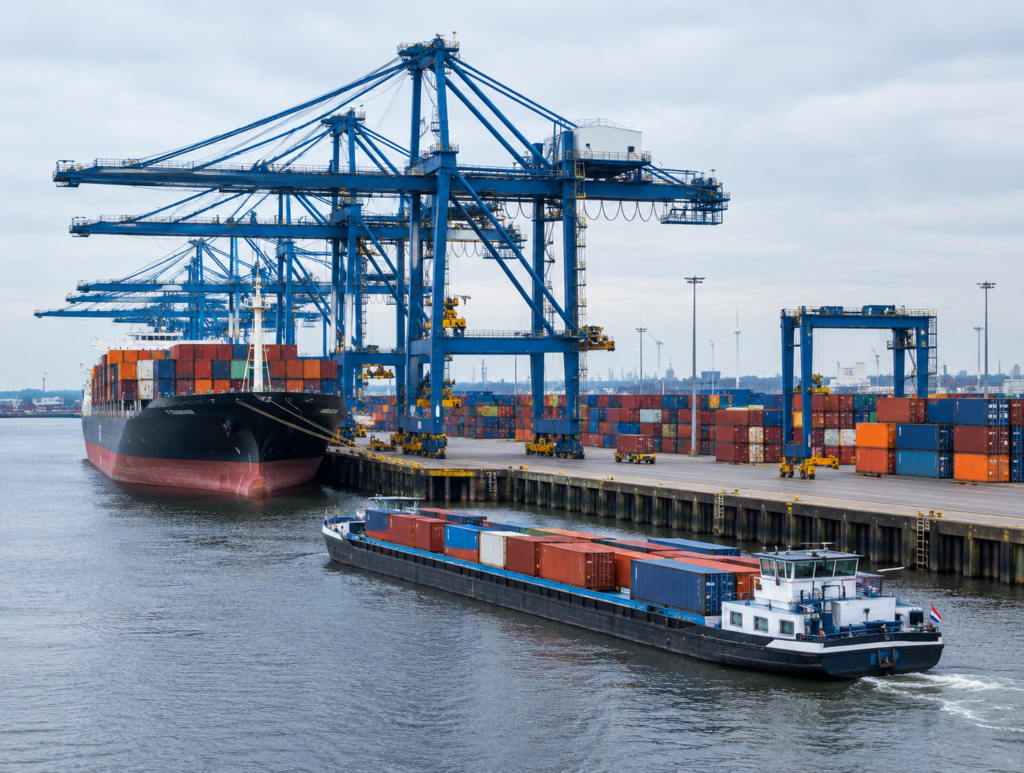
Beyond tariff treatment, the EU operates as one regulatory space for most purposes. Regulation (EU) 1169/2011 governs food information to consumers across the bloc, EU maximum levels for contaminants apply uniformly, and goods cleared into free circulation at any member state port move freely within the union. That is why a significant share of Pakistani-origin salt entering Europe clears at Rotterdam or Hamburg regardless of final destination.
Two markets sit outside this. The United Kingdom left the EU and now operates its own regime — DCTS preferences rather than GSP+, FSA rather than EFSA, UKCA rather than CE. Switzerland has never been an EU member, applies its own customs regime, and GSP+ does not apply there at all. Buyers purchasing for several European markets should specify per destination rather than assuming equivalence, which is the most common and most expensive assumption we encounter.

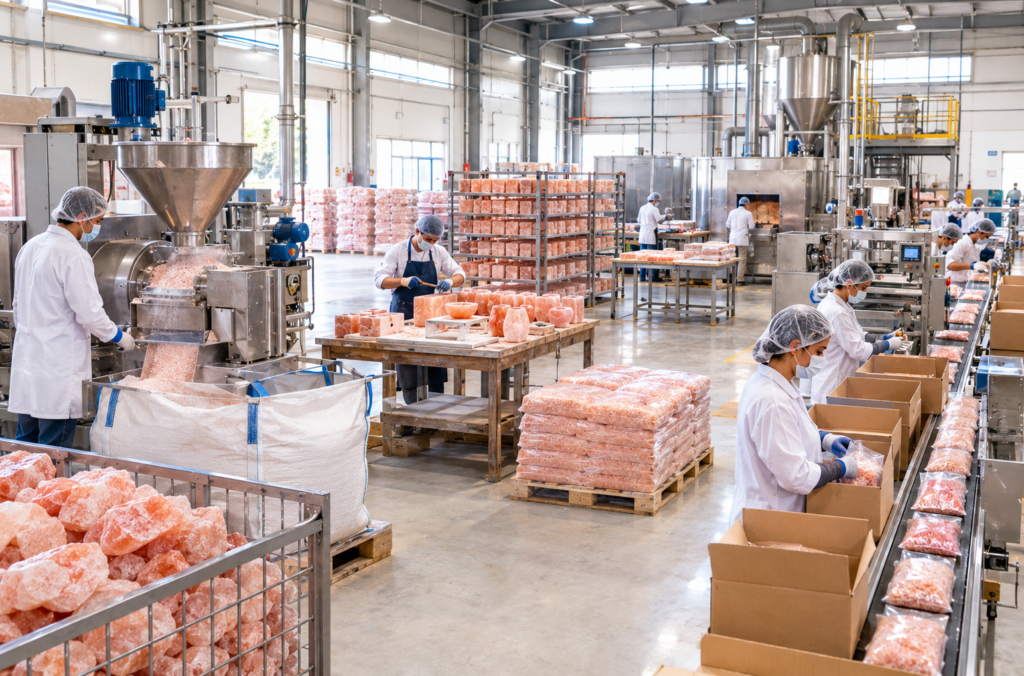
Europe is our largest regional grouping and the most document-driven. European buyers ask for specific evidence earlier in a relationship than buyers almost anywhere else, and they ask for the named document rather than for reassurance. A supplier who answers a request for lot-referenced analysis with a generic specification sheet has usually lost the business without being told.
That exactness favours a producer over a trader. Lot-level analysis requires knowing which production run filled which container, which requires having produced it. A trading house buying finished goods can supply a certificate for a batch it neither made nor can trace, and European procurement teams are unusually good at noticing. The same applies to origin: a GSP+ claim rests on a registered exporter statement, and an intermediary several steps from the producer often cannot support one cleanly.
The structure of European grocery shapes what a supplier has to be able to do. A large share of volume moves through chains whose own-brand programmes combine demanding audit requirements with high, predictable volumes and very little tolerance for interruption. Winning that work requires certification as an entry condition, then requires holding specification while scaling — a production capacity question rather than a paperwork one. Our facility runs over fifty tonnes of daily production, which is what lets a specification hold through a volume increase rather than loosening to meet a quantity.
Tell us the destination country, the channel, and the product mix, and we will confirm the origin documentation, labelling requirements, and analysis your entry needs.
WhatsApp us