
We supply Himalayan pink salt across thirteen Asian markets from our BRCGS Grade AA certified facility in Pakistan, from Colombo at a week’s sail to Busan and Yokohama at four. Asia contains both the shortest routings and the most demanding testing regimes we encounter, and several markets require overseas facility registration before a first shipment can clear. We prepare the documentation each requires.
Edible salt leads across most of the region, with the Philippines and Singapore showing the strongest search demand for pink salt of any markets we track. Bulk rock salt and granules supply repackers and food manufacturing. Table grades serve grocery and foodservice. Bath and wellness products perform in Japan, South Korea, and Singapore. Animal licks are the lead category in Mongolia and Kazakhstan, where livestock density is high and edible demand negligible.
Asia has no shared framework, and the markets differ more from each other than European markets do. What they have in common is that several require action before a first shipment rather than at the border. China mandates GACC registration of the overseas producing facility. South Korea requires MFDS overseas manufacturer registration. Taiwan requires TFDA registration. A container arriving without these does not get resolved quickly.
Testing is the second theme. Japan applies the strictest heavy-metal and contaminant testing of any market we serve, and South Korea is not far behind. These are markets where a supplier who can produce accredited laboratory results and lot-referenced analysis wins against one making assertions — and where the BRCGS Grade AA certification matters as supporting evidence rather than as a substitute for test data.
Routing is the third. Colombo is seven to ten days from Karachi and Singapore ten to fourteen, making South and Southeast Asia among the most responsive markets we supply. East Asia runs twenty to thirty days. Landlocked Kazakhstan and Mongolia move by rail and road rather than sea, which changes both cost structure and lead time substantially.

Most demanding testing regime we supply. Import notification under the Food Sanitation Act with rigorous heavy metal testing. Japanese buyers respond to lot-referenced laboratory analysis and recognised certification over marketing material.
Overseas manufacturer registration mandatory before first shipment; Korean labelling required for retail. Demand spans edible for food manufacturing and a strong wellness and beauty sector taking bath salt and soap.
Free-port gateway into ASEAN with strong pink salt demand. English-language labelling removes translation cost. Many buyers are regional distributors consolidating for onward movement into Malaysia, Indonesia, and Vietnam.
Second-highest relative search interest in Himalayan salt of any market we track. Salt for human consumption must be iodised under the ASIN Law — suppliers who cannot fortify are disqualified regardless of price. We supply to the mandated level with documentation.
GACC registration of the overseas facility is mandatory before any food shipment can clear — not negotiable or retrospective. Chinese-language labelling required. Registration should be completed well ahead of any commercial commitment.
TFDA registration required before import with traditional Chinese labelling for retail. Edible-led through grocery and food manufacturing, with a growing wellness channel taking bath products. Stable and predictable to enter.
Large hospitality and restaurant sector drives demand for table and cooking grades. Salt cooking blocks have grown with the restaurant scene. Bath products serve a substantial spa industry. Thai-language labelling required for retail.
Food safety self-declaration rather than full pre-registration makes Vietnam one of the more straightforward Asian markets to enter. Demand growing through grocery retail and food manufacturing as the processed food sector expands.
Import requirements lighter than most of the region. Often transhipped via Singapore. Volumes modest; demand concentrates in food retail and a growing hospitality sector. English serviceable for B2B.
One of the shortest routings from Karachi, with SAFTA preferential tariff treatment. English widely used in commerce. Edible-led through grocery, food manufacturing, and hospitality. Colombo also used for onward consolidation.
Goods move by rail and road via Iran or China rather than sea — cost structure and transit differ substantially from maritime markets. Animal salt licks are the natural lead given the scale of the livestock sector.
Livestock sector among the largest relative to population anywhere — mineral salt licks lead by a wide margin. Solid-cut blocks that survive harsh winters and wet seasons outperform pressed blocks substantially in these conditions.
India suspended imports from Pakistan in 2019 and applies punitive duty treatment. Listed for completeness rather than as an active market. Trade conditions between the two countries would need to change materially before supply is viable.
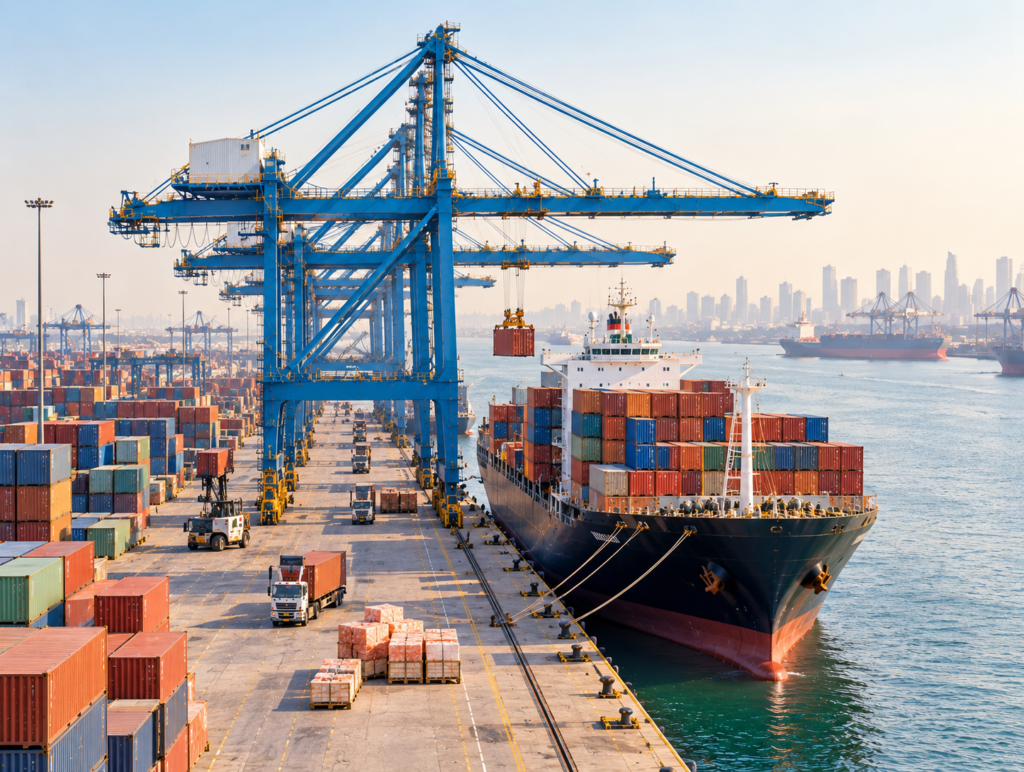
Asia is the most varied region we supply, and treating it as one market is the error that costs buyers most. A supplier set up for Singapore — English labelling, light registration, fast transit — is not set up for China, where facility registration must be completed before anything ships, or for Japan, where testing thresholds exceed what most producers can evidence. The regulatory distance between neighbouring Asian markets is frequently greater than between EU member states on opposite sides of the continent.
What this rewards is sequencing. Most buyers entering Asia for the first time do better starting with Singapore, Sri Lanka, or the Philippines — short transit, manageable registration, and English-language commerce — and adding East Asian markets once the supply relationship is proven and the documentation set is established. Starting with China or Japan is possible, but the registration and testing work sits entirely ahead of the first revenue.
The region also contains two markets that look nothing like the rest. Mongolia and Kazakhstan are landlocked, livestock-driven, and buy mineral licks rather than edible salt. Their constraints are rail capacity and winter field conditions rather than labelling and testing. Distributors in those markets are feed merchants, not food importers, and the regime they clear under is veterinary rather than food — a distinction that catches suppliers assuming food paperwork will serve.

Tell us the destination and whether facility registration is already in place for your product category. Where it is not, we will set out what we can provide and in what order so the sequence runs properly rather than stalling halfway. For buyers evaluating several Asian markets, we will say plainly which we would open first.
Request A Quote →WhatsApp us