
We supply Himalayan salt lamps, pink salt, bath products, and animal licks to Australian and New Zealand importers from our BRCGS Grade AA certified facility in Pakistan. Both markets apply strict biosecurity to timber and packing materials, and both regulate the electrical assemblies in salt lamps. Timber heat-treated and certified to ISPM 15, cords specified to SAA requirements, and packing prepared for inspection — the three things that hold shipments at these borders.
Oceania is the most lamp-weighted region we supply. New Zealand records the highest relative search interest in salt lamps of any market we track, with Australia close behind. Natural, bowl, and basket lamps lead, supplying homeware, gift, and wellness retail. USB and mini formats have grown fastest. Bath salt and salt soap serve substantial wellness sectors. Edible grades supply grocery and foodservice, and animal licks reach agricultural distributors serving very large livestock industries in both countries.
Australia and New Zealand operate the strictest biosecurity regimes we deal with, and they inspect the components and packaging rather than only the product. For a salt lamp — salt, a timber base, and an electrical assembly — two of those three attract attention before the salt itself is considered. Untreated timber is the single most common reason a salt lamp consignment is held in either country, and the consequences are not a delay but a cost: inspection fees, treatment, storage, and in the worst case re-export or destruction.
Food standards are shared. The Australia New Zealand Food Standards Code applies across both countries, covering composition, contaminants, and labelling, which means an edible product specified for one is broadly acceptable in the other — a rare simplification in our markets. Country-of-origin labelling requirements apply to food in Australia and affect retail artwork.
Distance defines planning. At twenty to thirty-five days depending on port, plus production lead time, importers here commit around two months ahead of need. Combined with lamp demand concentrating into the final quarter, that means a Christmas range is ordered in July or August, not October. A supplier who cannot commit a production slot at that point is not usable for seasonal retail.
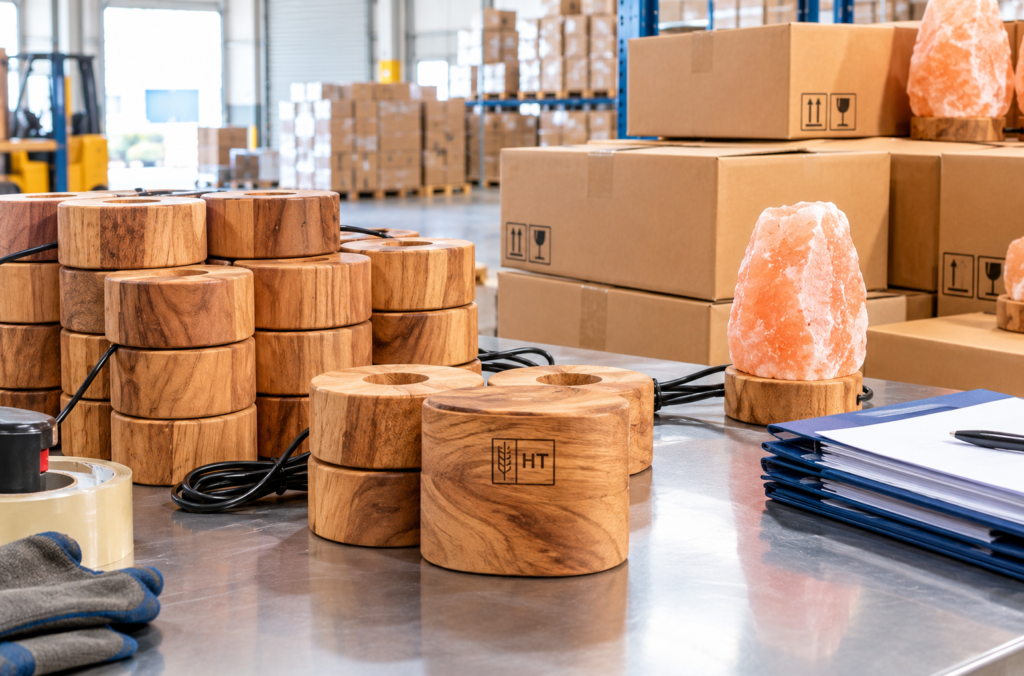
Most lamp-weighted Tier 1 market. Wooden lamp bases and timber packing must be heat-treated and marked to ISPM 15; lamps require SAA-approved cord assemblies with Australian plug configuration. Edible salt falls under the Food Standards Code with country-of-origin labelling for retail. Australia's large livestock sector makes animal licks a substantial second business, reaching feed merchants and rural retailers.
Highest relative search interest in salt lamps of any market we track worldwide — disproportionately valuable relative to population. MPI biosecurity requires ISPM 15 treatment for timber; cord and plug configuration matches Australia, so one specification serves both. Food falls under the shared Australia New Zealand Food Standards Code. Agricultural demand for mineral licks significant given the scale of dairy and sheep farming.

Oceania searches for salt lamps more intensively than anywhere else we supply, and it also runs the strictest borders for exactly the kind of product a salt lamp is. That combination explains why importers here become very particular about suppliers after being burned once. A consignment held for untreated timber is a cost rather than an inconvenience, and the first an importer usually knows about it is a notice from DAFF or MPI.
We treat and certify as standard rather than on request, because the alternative is transferring a border risk to a customer who cannot manage it from the other side of the world. The same logic applies to electrical specification: an SAA-compliant cord costs marginally more than a generic one and is the difference between a shipment that sells and one that sits in a bonded warehouse. On a lamp-led region, getting those two right is most of what a supplier is actually for.
The agricultural side is worth treating as a separate business rather than an add-on. Both countries run livestock industries large relative to population, and mineral licks reach feed merchants and rural retailers through entirely different distribution from homeware. Solid-cut blocks hold up in Australian and New Zealand field conditions where pressed blocks dissolve, and the import regime is veterinary rather than food. Distributors covering both sides can consolidate onto one shipment, which few suppliers can support because few produce across both categories.
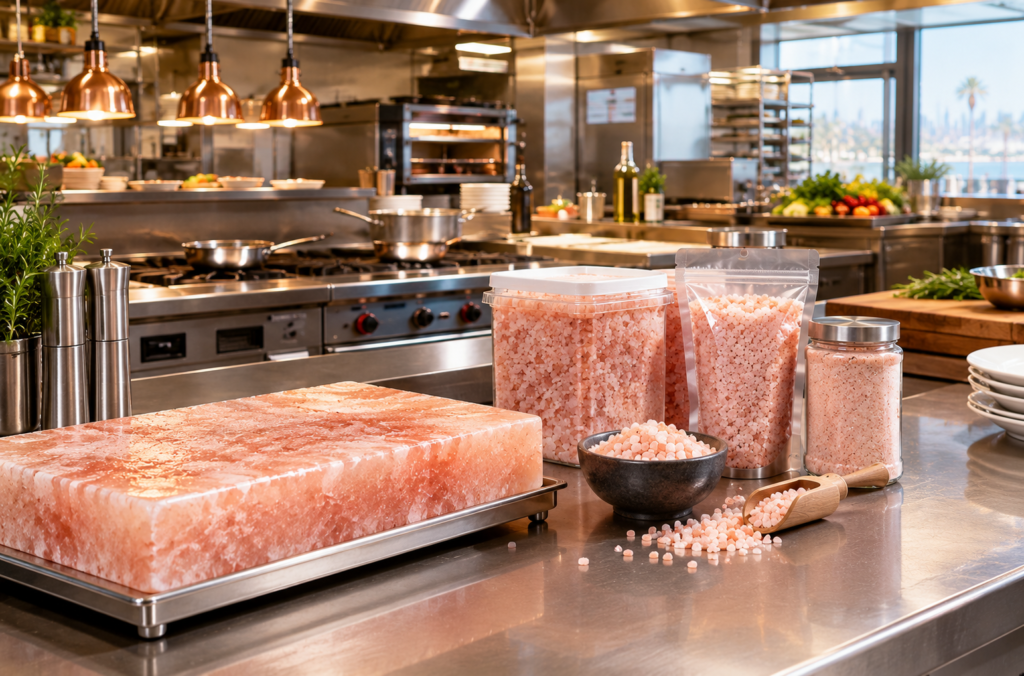
Tell us the product mix, particularly whether lamps are included, and we will confirm timber treatment, electrical specification, and packing requirements before quoting rather than after a consignment is held. If you are ordering for a fourth-quarter season, talk to us by mid-year — production slots plus twenty-five to thirty-five days of transit mean an October order does not make Christmas. Mixed trial pallets are available.
Request A Quote →WhatsApp us